Recently, I was at a happy hour talking to an ex-copywriter. He told me that at his interview for a copywriting job at a creative agency, they asked him, “Why do we need to hire you?” He told me that before they hired him, they never had a copywriter.
The devaluation of copywriting is common. Chat GPT and the idea that writing is easy and anyone can do it makes a lot of creative agencies figure that maybe designers can just write copy. But in my opinion, everyone can write — not everyone can copywrite.
Writing is nuanced
You know how not all designers are illustrators? Not all writers are copywriters. Even my English degree didn’t fully prepare me to write copy. Of course, some classes were applicable to my career, but it was a lot of learning on the job and researching principles of marketing. Copywriting is a specialty within writing that not every writer has.
What is copywriting?
If you’re in the agency world, most people refer to every piece of writing as “copy.” But it’s a bit more complicated than that. A copywriter is someone who uses words to sell. Advertising, email marketing, and website copy are all great examples of copywriting.
In contrast, content writers aren’t necessarily selling, but rather trying to engage, educate, or entertain their audience. Usually, content writing won’t include call-to-actions, whereas copywriting will.
For example, social media captions can fall into either of these categories. If it’s writing to sell — like promoting a new product — that’s copywriting. If it’s more educational, informational, or entertaining with no call-to-action or product promotion, it’s content writing.
Why is good copy important?
Copy is a mixture of art and strategy, creativity and logic. Good copywriters empathize with their audience, answering questions before they’re asked. This takes a great understanding of the target audience, their pain points, and their beliefs.
Copywriters also have to know the specifics about the brand they’re representing. That includes the brand’s philosophy, tone matrix, and verbal identity. From what the brand would say to whether or not they would include an Oxford comma — it’s all important to copywriters.
Copywriting is a blend of addressing the audience well and properly representing the brand. When copywriting is done right, it builds trust with the audience, is extremely persuasive, and leads them down the marketing funnel.
Organization & logic
To properly lead your audience down the funnel, the copy has to be organized and strategic. Great copy is like a conversation that makes sense. When copy “makes sense” it feels more authentic to the audience and helps them process the copy.
Any good writer has learned how to organize information properly, but with copy it’s a bit more specialized. It requires a deep understanding of the marketing funnel as well as each piece of copy. For example, you wouldn’t write an email the same way you’d write a landing page.
Graphic designers aren’t copywriters
I’m not saying they can’t be! I love both copy and design. But if a designer hasn’t dedicated their time and energy to the craft of copywriting, then they’re usually not going to be able to create effective copy.
It’s not fair to expect graphic designers to be copywriters, especially if they have no interest or desire to learn more about the skill. Graphic designers are so important, of course, but their priority is taking the message that copywriters create and presenting it visually.
Graphic design and copy work hand-in-hand, but they are two totally separate skills. One person can have both skills, but that takes years of intentionally learning both crafts.
AI can’t compete
It takes a great designer to see what’s wrong with a design — similarly, it takes a great writer to see where copy can be improved. Even if AI gives you an amazing output, you still need a great copywriter to recognize that great output and piece it together in a logical way.
I know many people are concerned about AI in the creative field, but as a copywriter, I know that AI doesn’t help me on my most challenging copy projects. It may help me maybe 10% of the time, but it’s just a tool for writers. Not a replacement.
Copywriting is about emotional connection
The biggest flaw of AI is that it’s not a human. It can’t understand emotions and be empathetic, which is required of copywriters. While we address the audience’s pain points, it’s all about doing so in a way that is understanding and kind. By catering to the audience’s emotional state, copywriters encourage them to take the next step down the marketing funnel.
Anyone can write, but not everyone can inspire action.
What are your thoughts? Don’t hesitate to share in the comments.
Lowkey sad how many poetry and lit journals have shut down or gone on hiatus. These have all been published in journals and magazines that may or may not still exist — but let’s give these poems their moment, shall we?
All I See is Golden
Published in The Origami Review, 2022
My dad always says to look at the bright side of life — he wouldn’t believe me if I told him I found it here.
The yellow leaves catch the light of the setting sun, a glimpse of heaven clinging to the branches, their final days and I’m not sure if it’s a celebration or a funeral.
I should see death but all I see is golden.
Touching the Sky
Published in Healthline Zine, 2023
Maddy tells me I seem enlightened and I’m still trying to believe her. In yoga, Bani tells us to send compassion
to the parts of our bodies that hurt. I’m empathetic to the quiver in my lip
and faith fills the room with the morning sunshine. I’ve been trying to be my own lighthouse
but the sun has been waiting to shine on me, willing me to stand tall
as the field of sunflowers on my drive home reaching up, touching the sky.
Bleeding Fruit
Published in Scran Press, 2022
Everyone agrees my aura is pink but one specifies what shade.
Am I grapefruit, the one who’s always passed up for another?
Am I passionfruit, beautiful yet tasteless? Not everything pretty is sweet.
Or am I peach? Baked before I spoil, too soft to stick around long.
I want to be red; not like Taylor Swift but pomegranate dripping down your chin, cherry caught between your teeth.
Nature’s Litany
Published in pomegranate lit, 2021
They say “finding yourself” like you’ve got a map with red pins; in each location, you’ll find a new piece of yourself. I’m discovering myself without ever leaving
my front porch. South Ave feels like a fairy tale and the white flowers look like tiny angels, kneeling, praying on the branches.
I’ve never been able to get high enough to know how sweet the blooms smell. One time I got so high, the old tree told me it loved me.
Apartment 2
Published in COLORS: GREEN, 2023
You can find shelter in the details bong on the bedside table the plant that droops until you water it how the sun shines through the window on the left in the morning.
You can find shelter in the details curtains and blankets with vines on them, velvet forest green pillow, a herbarium painting on the wall. According to a Feng Shei expert on TikTok, green wakes you up, gives you energy. I’m trying to feel more alive.
You can find shelter in the details I tell myself this. See the shadows of branches blowing in the wind?
I See You in the Sunset
Earlier version of this poem was published in The Lunar Journal, 2022
In Austin, I keep looking for you — you always did say old habits die hard. I see you
in every passerby on the street, in a run-down dive bar listening to that Old Dominion song you love, the one about sunshine
fading and planes flying away. The sun kisses the horizon like lovers before they part and I’m wondering
why golden hour never feels golden, why it always feels like goodbye.
White Roses
Published in Selenite Press, 2022
Pregnancy: I’ve heard it hurts like hell but after, you can’t even remember the pain. Maybe that’s how you felt in your final moments; your last labored breath into your lungs, delicate as petals, a sigh of relief.
I wish I could have done more—given you all the oxygen on the planet. You were unforgettable as a bouquet of white roses and I can see you now surrounded by blooms feeling nothing but springtime.
I hope one day I can lay with you smelling sweetness and innocence and forgiveness.
Ten million fireflies: a city, a skyline more luminous than New York. They don’t teach me
how to dance, but how to be free. How to fly like it’s my last day, how to feel the Earth as it spins,
so slowly, how to avoid mason jars. We deserve so much more than life inside a glass. People try to capture
a picture of us but we don’t want to be framed; all we want is to be alive.
LOOMINGS.
Found poem from from the first page of Moby Dick; Or, The Whale by Herman Melville. Published in The Creative Zine, 2022
Dr. Teal’s
An earlier version of this was published in Healthline Zine, 2023
Therapy is $15.99 if you order on Amazon. It smells of the feeling I’ve been chasing since 2018 the no-need-to-set-an-alarm, reading-poetry-by-candlelight calm / or, chamomile. Comfort is a warm bath full of salt. Dr. Teal is the angel who kisses my hands.
Thought leadership content is one of the greatest things your business can generate in terms of value. Done correctly, you could drastically increase your brand’s reputation as a thought leader in your industry. But why is this content so important for your business?
Thought leadership content is a crucial part of your marketing funnel because it helps you to attract and retain the right customers. When I was creating my client’s LinkedIn ad strategy, thought leadership was the first step in the marketing funnel.
Your thought leadership content should be based around topics that are relevant for your target audience and should provide them with information that they can’t find anywhere else. Thought leadership:
Helps build trust with your audience
Improves your brand’s reputation
Allows you to reach new audiences
Helps you stand out from the crowd
How to create thought leadership
Here are three steps to create thought leadership in your niche:
Create a persona for your ideal customer
Create a list of questions they might have about you or your product/service
Answer those questions using your expertise
Then, create the content by writing it down and publishing it, or recording a podcast. When you create thought leadership content, you’re essentially making yourself a resource. You have great ideas that no one has ever shared before. By sharing, you’ll be helping your ideal customers…which will make them more likely to buy from you.
You can use this content to demonstrate that you’re an authority on your topic, and it will also help you connect with potential customers by showing them that you understand their problems and can offer solutions.
Thought leadership content is one of the most important types of content you can create, because it helps you to stand out from your competitors and position yourself as the expert in your field.
Key characteristics of thought leadership
What makes content thought leadership, and not just generic content? Here’s differentiates thought leadership:
It isn’t generic
It has original insights and ideas
It answers the audience’s needs
It’s genuine
It’s created with purpose (besides selling)
Here’s a checklist to follow to ensure you’re creating thought leadership:
Is this content the first of it’s kind (not just repeated from hundreds of other blogs)?
Is your viewpoint unique, and possibly even unexpected?
Are you providing insights that others don’t have?
Are you providing direct recommendations?
If you answered you’ve checked every question off as “yes,” then you’ve got yourself a great topic to create thought leadership.
Does thought leadership lead to conversions?
Is thought leadership really that important? I’m telling you, yes—but I get it. You want to see the statistics.
For business-to-business (B2B) marketing, thought leadership led 57% of decision makers to purchase. Especially for B2B businesses, thought leadership content is king. However, it can (and should) still be used by business-to-consumer (B2C) content marketers.
Thought leadership needs to be written well
38% of senior executives were turned off by thought leadership content because it was difficult or boring to read. Since thought leadership content is so essential to developing your brand, you need to invest in a great writer.
I love creating thought leadership pieces—in fact, it’s my favorite way to spend the day. If you have ideas you want me to turn into great content, I’d be ecstatic to learn your unique viewpoints and create the content.
I once found myself writing a service page about a company who writes service pages. Ironic, right? I’ve written many other service pages since then, and I can help you write yours.
A service page is a place where you can explain what your services are and how they work in plain language. It’s a place where people can get all their questions answered, and find the information they need to make an informed decision about whether or not they want to work with you. It also gives them an idea of who you are and what makes you different.
Service pages are written in a way that is easy to understand and intuitive. It doesn’t matter how complicated your service is, I’ll break it down so your audience can understand. I’ll decrease your audience’s headaches—not add to them.
Service pages are a great way to shine a light on your business’ best qualities—I’ll take the flashlight and let everyone know how great you are.
Knowing what you’re going to publish is key to making sure our content gets noticed by the right people at the right time. A good marketing plan will help you:
Know what to say, when, and where—and why it matters
Create more meaningful connections with customers, prospects, and partners through the right tone of voice and language
Avoid being spammy or annoying (and instead build trust)
After learning about your marketing goals, I’ll come up with an editorial calendar—a list of the emails, blog posts, and social media posts that we’ll publish throughout the entire month. I’ll help you decide what content you need to publish—and when—so that your business hits its goals and makes an impact on your customers.
My services include:
Monthly messaging plan: This is where we come up with the topics, timing, and tone for each piece of content.
Content research and creation: This is where I find all of the facts and figures needed to craft your message.
Social media and email management: This is where I create graphics, write content, and publish it using programs Hootsuite and Mailchimp.
Your marketing messaging plan is your roadmap to success. Let me lead the way.
I know you have amazing ideas that would benefit others—you just don’t have the time to write them. Let’s work together so you can share your ideas through thought leadership.
Thought leadership is the ability to lead others through your ideas, opinions, and vision. It’s about being able to take a stand on something—whether it’s a new product idea or a different way of doing things—and having people listen to what you say because they trust you.
Thought leadership accelerates your marketing strategy by increasing brand awareness and your credibility with customers. It also improves your sales by helping customers understand why they should buy from you, instead of someone else.
Especially in B2B marketing, thought leadership is essential. 57% of B2B decision makers say thought leadership directly led them to convert.
Here’s the process: I’ll interview you and discover your point of view. Then I’ll deep dive into research, gather statistics, and create content based on your viewpoints. Here’s some examples of the thought leadership content I’ve created:
I’m on a mission to empower business owners like you to get more customers, leads, and clients—without you having to work longer hours. I do this by planning and creating your email campaigns, uploading them into the software, and automating the schedule.
Did you know email marketing delivers the highest ROI of all marketing channels? By investing in email marketing, you can expect $42 back for every $1 you spend. Even though it seems “old school” with social media gaining prevalence in recent years, email marketing is still by far the most effective.
You can use email marketing to:
Build customer relationships
Convert more traffic into leads
Nurture relationships with prospects
Give product or service updates
Increase revenue
Business owners have so much on their plate these days. The list of things you need to do each day is endless! The last thing you want to do is deal with creating email content. Lucky for you, I love creating content for emails.
Now that I’ve been an entrepreneur with my own content marketing business for about a year now, I get a lot of questions about how I did it. And while I could dive into the actual practicalities of how I started my own business, the truth is: A lot of it has been “luck.” A lot of it has just worked out.
Of course, your game plan is essential. Knowing how to get started is essential. But so is a mindset shift.
A few years ago, I would have been embarrassed to admit my beliefs online, especially in connection to my business. But I think a lot more people nowadays are curious about spirituality and manifestation. If you’re at all curious about it, and how it can excel your entrepreneurial journey, then keep reading.
First, you have to be in a good place
If you’re in a really awful place, me telling you to “shift your mindset” and “just manifest” is probably garbage advice. Of course, there are some situations where you can’t just manifest your way out of it. This advice is much more useful for someone who has their basic needs met. They’re in a decent place looking to find a happier place, where they feel at ease.
My experience manifesting a career
First, before I talk about manifestation, I want to talk about my experience manifesting a career. As Gretchen Rubin writes in The Happiness Project, “I often learn more from one person’s highly idiosyncratic experiences than I do from sources that detail universal principles.” So here is my highly idiosyncratic experience—I hope it helps you on your own path.
In June of 2020, I felt heartbroken about my career. At this point, it had been over a year since I had graduated college. There was still no sign of a good job in sight. I was working minimum wage jobs that I knew I couldn’t go back to when the COVID-19 lockdown ended.
On lockdown, I was a heavy TikTok user. I lived alone, and it helped me pass the time. I had stumbled on a lot about manifestation, and while I didn’t necessarily believe it, I figured I didn’t have anything to lose. I mean, it couldn’t hurt, right?
There was one company I was interviewing for, and I really wanted the job. I had learned from TikTok that one method of manifestation is scripting. With this technique, you write what you want to happen as if it has already happened. I wrote in my journal, “I’m so grateful I am a Content Writer at Smart Training.”
A few days later, I got the offer letter. A few weeks after that, it was my first day on the job.
For me, that pretty much solidified that manifestation is real. At the time, I didn’t quite understand the complexities of it. But my experience was proof enough that it works, and that I should keep doing it.
At Smart Training, I would take a few minutes every day to write some of the things I wanted to manifest. I’d write:
I’m so grateful my career is successful.
I’m so happy I got a raise.
I’m happy to be thriving in my career.
Because even while I was happy with my job, I still wanted to keep doing better. I kept scripting almost every day. Then one day out of the blue, someone I had worked with at my previous job at CycleBar called me up. She said she had a position open for a Marketing & Communications Coordinator. I ended up getting the job.
Once I was in that role, I realized how much I had left out when I was trying to manifest a new career. I had been so focused on “moving up the corporate ladder” that I hadn’t thought about my own happiness, or work-life balance. I hadn’t thought about the fact that I want to be able to enjoy some days working from home. I hadn’t considered that flexibility and getting along well with the people I work with is so important.
Get specific in your manifestations
I had gotten what I manifested. But I hadn’t been smart about manifesting the right thing for me.
While at that job, I started manifesting differently. Yes, I still wanted to do well in my career and get a raise. But I also wanted to enjoy my life and not be constantly overworked. I wanted to move back across the country so I could enjoy dinners with my parents. I just started getting real with what I actually wanted out of life, not just my career. Because what good is a great career, if all you feel is burnt out and overwhelmed at the end of every day?
At the time, I had thought I wanted a full-time marketing role at the university I graduated from. However, I got rejected from that job, which made me question manifestation. Why wasn’t I getting what I wanted?
I ended up quitting my job as a Marketing & Communications Coordinator. It just wasn’t worth the toll it was taking on my mental health. I started freelance writing, thinking I’d only do it while I looked for another full-time role. But then it all just keep working out.
And then I realized: I hadn’t been manifesting the full-time marketing role. I had been manifesting my freelance career. I had the money I wanted, with the freedom and remote work I wanted. It had all worked out perfectly.
If you’re thinking about trying manifestation, what have you got to lose?
Persistence is key
I think the key was persistence. Even when I was happy with my job, I kept reaching for me. And on the opposite end of the spectrum—even when I was crying after work every single day because I hated my job, I kept believing that better things were coming to me.
It’s all about persistence. Through the good and the bad times. While you don’t have to script every single day, you do have to continuously believe with conviction that what you are calling in what is meant for you.
Monitor and shift your mindset
Anyone who has shifted their mindset knows it’s a continuous process. I definitely notice a difference in my luck if I have a negative mindset. If I’m thinking, “No clients would hire me,” guess what? No clients hire me. That’s because in manifestation, what you think is what becomes true. This is called the “law of assumption.” What you assume to be true is true.
But when I think, “My dream clients have found me,” guess what? My dream clients end up finding me. And I really don’t have to put that much work towards trying to land them.
If you start practicing manifestation, just know that you are in control of your mindset. It might take some time and practice. It’s by no means easy. But you can shift your mindset from negativity and limiting beliefs to positivity by practicing a “mental diet.” To put this into practice: Every time you have a negative thought, follow it up with a positive affirmation.
What’s a positive affirmation?
Positive affirmations are phrases you tell yourself that help you shift your mindset and beliefs. Here are some positive affirmations I use:
I don’t have to work hard to earn money.
Every time I enjoy myself, I earn money.
Money loves spending time with me.
Money is attracted to me.
I deserve to be financially abundant.
Positive freelance opportunities flow to me endlessly.
My dream clients have found me.
I am great at my job and I love what I do.
My clients value me for what I bring to the table.
Affirmations are part of my everyday, but I especially love them at night right before I fall asleep. I find that when I focus heavily on my affirmations before sleeping, I have a great quality of sleep that I don’t experience otherwise. For example, I’ll wake up earlier and feel more well-rested.
Expanding beyond affirmations
You can choose to stop at affirmations, but if you want to get even more spiritual, I highly recommend getting some crystals for your desk. For example, Tiger’s Eye helps you excel in your career and give you the determination you need to power through your work. Citrine can help you improve your wealth. Carnelian and Moonstone can make you more creative.
Taking inspired action
Of course, a mindset is nothing without action. In manifestation, it’s called the inspired action. Mia Fox writes, “An inspired action is when you do something because you feel the strong inner urge to do it, like having a gut feeling.” She continues, “You could also call it intuition. Or to have a creative idea or epiphany. And you are then taking action on it.”
Of course, inspired action includes working hard. But it also includes taking breaks. Or enjoying a simple conversation, which could lead to a prosperous business connection.
Feeling gratitude
One of the most important aspect of manifestation is to come from a place of gratitude. Even if you hate your job (like I did), strive to find things to be grateful for. Do you love your morning coffee? How cute your cat is when she sleeps? Nature walks with your mother? The ease of your own breath? Your health?
Whatever you can find that you love—cling to it. And emphasize it on a daily basis.
If you can’t find much to you’re grateful for, work to infuse your days with joy and happiness. Because once you start feeling grateful, there’s no limit on what you can manifest.
For example, even when I hated my job, I was still grateful to be learning so much. I knew it would be valuable in my career. So I clung to that.
In summary, gratitude is key for manifesting.
Entrepreneurship & spirituality
Think about it like this. If you don’t see your own value, how can anyone else?
When you have negative beliefs about yourself, they affect how you show up in the world. And unfortunately, they affect how other people see you. They might not want to hire you, or they might not want to pay you what you deserve. But when you have positive beliefs about yourself, the opposite is true. Your path to success becomes clear, simple, and dare I say it: Easy.
When it comes to entrepreneurship, I truly believe I wouldn’t be half as successful as I am if I never got into spirituality. Who knows if I would have even gotten that first career job at Smart Training?
Business owners are busy people. They typically know they need to consistently blog, but they don’t have the time, energy, or the specialized skills to do that. On top of writing alone, you also have to worry about optimizing the content for search engines to prioritize.
At this point, you’re ready to hire writers (or you already have). But how should you navigate choosing to taking advantage of ghostwriting, versus keeping the writer’s name as the author? This blog will help you decide when to use your name or the author’s name to improve your website’s search engine optimization (SEO).
Firstly, what is SEO?
Search engine optimization (SEO) helps search engines, like Google, deliver the highest-quality content to the users. Google is looking for certain aspects of your website and content that makes it more valuable to users. A simple example is: If your website isn’t speedy, your SEO score will suffer.
SEO is a competition. Plenty of other businesses are writing similar content to yours. For example, think of a blog article topic. Next, look it up into Google. See how many results there are? The blogs that are showing up at the top are strategically optimized for SEO.
The competition for those first spots are fierce, but when you land them, you’ll get the most traffic. For example, that first five organic results (not an ad) get 67.60% of all clicks. That number steadily drops as you keep going through the results. Shockingly, 91% of all pages never get any organic traffic from Google.
When you’re creating content, you want people to find it (without you continuously promoting it on your channels). When people are clicking on and reading your blog posts, you build trust with your audience, credibility, and brand awareness.
Why the author’s name matters in SEO
Google uses over 200 ranking factors in their algorithm to determine whether posts will be seen by searchers, or not. One of the most important ranking factors is author reputation. It’s what’s known as E-A-T:
E: Expertise
A: Authoritativeness
T: Trustworthiness
EAT ensures Google is providing accurate, truthful, and useful information. Author credibility is especially important for pages that fall under the YMYL category. YMYL stands for “your money or your life.” This includes topics that impact the finances, health, safety, and happiness of readers. When you have content that falls under YMYL, having an expert author is especially important.
Even if your topics don’t fall under YMYL, it’s still important to have credible authors.
Here’s the key: Include an author that is credible, knowledgeable, and has experience writing about the topic of the blog post. Google should have evidence that the author has previously written about the topic. Does it matter if they really wrote it? No.
What is ghostwriting?
Ghostwriting helps when you don’t have time to write, but still want your blog to be active with posts under your name. With ghostwriting, you’ll pay a writer to complete the process for you, and you’ll put your own name on the article.
Ghostwriting isn’t a new phenomenon. Many writers create high-quality blog posts for other people who can’t or won’t write blog post themselves. In summary, ghostwriting is a piece of writing created by someone else. Many companies pay writers to produce content for their blogs, yet they still put their CEO’s name in the byline.
Keep in mind: Your writers may have a preference
Some writers require that their name is on the byline of the posts they write. Can you blame them? It’s the key to establishing their brand and credibility as a writer. Plus, they can use those articles easily in their portfolio. Also, it just gives them credit for their work, which is important to a lot of writers.
In contrast, other writers don’t care at all. In my case, many of my clients have me produce ghostwritten content. And that’s fine by me. (Then again, I’m producing my own blogs on my own website to establish credibility in Google. So more bylines aren’t a priority for me.)
I’ve also seen other cases where writers didn’t want to put their name in the byline. They wanted to take on the project, but not get the credit.
The bottom line is: Every writer is different. Make sure you’re clear about whether the content will be ghostwritten, and include a clear clause in your contracts. By communicating, you can find writers that are perfectly fine with your decision—whatever it is.
When to choose ghostwriting
Choose ghostwriting if you’re not prepared to find writers that already have bylines in the topics of your blog posts. If you’re going to hire a team of writers that aren’t subject matter experts (SEMs), then it’s better to put ALL the posts under one or a few main names on your blog. For example, the CEO or the content marketing manager. That will build your credibility within Google, and you can continue hiring out ghostwriters.
Ultimately, your SEO will benefit. Growing your credibility will take time, but it’s worth it.
Also, if you or your content marketing leads already have credibility within Google, then choose to publish content under your names.
When to choose keeping the real writer’s name
It’s simple: Choose the writer’s name if they are an expert in that topic (and Google knows it).
How to establish Google credibility
1. Continue to build content in relevant topics
Build high-quality content in the topics you want to be deemed as credible in. Make sure your name is on all the pieces you’re writing.
2. Have an author bio and page
Every author needs an bio. You can even create a more detailed page that the bio links out to. Make sure that your author bio details all your education, credentials, job history, and relevant links.
SEO matters, and so does who wrote the article—especially if you’re writing about topics that impact the reader’s money or life.
How do you become a better writer? How can you write more, or even better? Well, most people think it’s all about talent. You either have it or you don’t. But that assumption couldn’t be further from the truth.
Stephen King once said, “Talent is cheaper than table salt.” What he means by that is that if you are disciplined enough, then you can become a great writer. However, it’s not a light task. Anyone who knows anything about writing, knows that sitting down and putting your ideas into words isn’t an easy task. In fact, it can be so difficult that there is a name for the condition of being unable to write: “Writer’s block.”
If you want to become a better writer, then you need to develop habits that will help you achieve your goals. Thankfully, these habits aren’t difficult to learn or difficult to implement. This list of habits will help you create a writing routine that ensures you’re taking your writing career to the next level.
5 habits of highly effective writers
1. Give yourself permission to be a beginner
As a beginning writer—and as a beginning anything else, for that matter—there’s a possibility you will struggle with writing. You might get discouraged and think about quitting. But it’s important to give yourself permission to be bad at something in order to learn how to be good at it.
This was the habit I struggled with most when I first started writing, and it’s still the habit I struggle with most now that I’m an experienced writer: Giving yourself permission to suck at something is hard! As a beginner, you can forget about trying to be perfect or even great right away. It’s not possible, no matter what anyone tells you.
The freedom you have as a beginner can also help free your mind when it comes time to write each day. If you’re trying too hard to write professionally right off the bat, or if you’re stressing out over producing perfect, publishable prose already, then it will put pressure on your ability to create valuable writing. Remember, you can always edit later.
2. Create blocks of time in your schedule for writing
There’s a lot of ground to cover when it comes to writing well, but what’s most important is that you take the time to practice. Chances are, you have so many other things competing for your attention, that there will be times when you won’t be able to find time in your day for writing. That being said, we can still use our schedules as an anchor point, and use it as a way to help us make sure we’re doing everything we need.
For example, if I want to write, I make sure to only start whenever I’m motivated. If I am unmotivated in the morning, I’ll wait until the afternoon to start writing. The morning may be dedicated to an early walk to clear my head.
Aldjusting my schedule to working when I’m motivated is a perk of being self-employed, but even when I had a full-time job in marketing, my manager agreed with this philosophy. She said if I ever couldn’t find inspiration, that I should just go work out or take a walk (we worked at a fitness facility).
Plus, when I do start working, I make sure I don’t keep my phone on me when I know I’m about to dive into heavy creation work. When I’m done (or get far enough), I’ll go scroll on TikTok and Instagram as much as I want.
You need time to JUST write. If you need a few breaks, allow them, but plan them strategically. Avoid hopping on your phone during your creative block of time.
3. Streamline your processes
Another habit of effective writers is that they streamline their processes. The best way to do this is with a checklist of sorts that includes all the steps you need to complete in order to finish the piece of writing. Make sure it’s realistic, but thorough—there’s no point in making it if it doesn’t actually help you get it done. Some steps to consider including are: research, drafting, editing, proofreading, and publishing (if applicable).
Don’t be afraid to lean into tools and automation. For example, you can buy high-quality editing tools that will also check your work for plagerism.
4. Embrace feedback
Nobody likes getting criticism. If you can’t take feedback from others, then it’s going to be tough for you as a writer—you’ll always get notes from clients or editors, and if you can’t deal with that, then your writing career is going to have a very short life span.
Getting feedback from someone else can help you see what needs changing and what needs fleshing out in your work. It can also help you see which parts are working well! Just remember that it’s important to take the feedback seriously, and not just ignore it because you don’t agree with it. The whole point is for someone else to be able to see what needs changing or improving upon.
Instead of taking feedback as a personal attack on your skills as a writer, think about it as an opportunity to learn something new! That will make the process much more enjoyable and less of a chore.
5. Stay organized
Organized writers are able to stay on top of their workloads and keep track of their assignments and deadlines. Don’t be afraid to keep detailed records. Learn how to make good use of a calendar, reminder app, or other organizational tool that works best for you!
Take five minutes in the morning (or evening) to go over your schedule, and make sure you know what you need to be doing, where you need to be, and when. This will help you be on time for all the important events that matter to your writing career. Plus, it’ll help you finish projects on time.
Takeaway: If you keep committed and focused, you can make writing into an effective habit
Now that we’ve covered the habits of effective writers, let’s examine how you can develop these traits and make writing a part of your life.
Know what you want to write about: Reflect on the things that interest you, and think about what kind of content would fit with those interests.
Be prepared to write: Create a writing schedule or at least know when you will write, making sure it is realistic. Set up a time and place that works for you and stick with it!
Get focused: When it comes time to actually write, focus only on writing—don’t get distracted by other things like emails or social media notifications popping up in your periphery (either turn them off or close all tabs except the one where you’re typing).
Keep going: Don’t give up after the first few weeks; if being an effective writer is something you really want to be, persevere! Don’t worry if your posts aren’t perfect right away; just keep going until it becomes second nature!
Anyone can be a writer. You just have to start writing.
Incorporate better habits
Writing is hard, and getting better at it is even harder. That said, we’re willing to bet that you can improve your writing by incorporating these habits into your workflow. Each one of these habits has helped countless writers reach new levels of success. By getting into the habit of doing them, you’ll be able to produce better content across the board.
You might not be able to make real progress over night, but if you give yourself the chance to improve as a writer gradually over time, you’ll get there. And hopefully, this list will inspire some of you to start writing more often and with more success. Writing is a skill that needs to be practiced and honed over time.
If you run a small business, it’s important to find creative ways to attract new customers. But coming up with new ideas can be challenging. A lot of the time, marketing and advertising ideas come in waves. You’ll get a good idea and then nothing much else for a little while—and then another one hits you out of the blue.
Creative marketing is the most effective way to reach your audience and enhance your results. Creative ideas are also a great way to provide a fresh approach for your existing marketing campaigns. But what about when those creative juices stop flowing?
Everyone (who is involved in social media anyway) gets stuck with a creative block now and then. This blog post is designed to give you great ideas for marketing on social media.
Get inspired to get creative on social media
Social media is an incredible and effective tool for building your business. It can be used to market anything with the right techniques and strategies involved. 89% of business-to-business (B2B) companies view social media as a top content distribution channel. 96% of B2B content marketers use LinkedIn, and 82% use Twitter.
Being creative on social media can be tricky. You need a unique way of approaching content, an engaging manner with potential customers and hosts, inventive design, and positive interactions with followers. Through this blog post, we’ll take a look at different ways to be innovative with this type of marketing. We’ll cover the fundamentals of creative marketing and provide you with many ideas for increasing traffic and brand awareness.
Content should be about customers, not your business
Before we dive in, I just want to be clear: Content, especially on social media, should be centered on your customers, not your business. It should be created to improve the lives of your consumers.
Ask yourself: What kind of content will provide value to your customers? What kind of content will help them feel an emotional connection with your brand?
Identify your audience
First things first: what are you trying to accomplish? Are you trying to reach out to potential customers? Do they already know about your product/service? It’s essential that you know who your target market is before creating content for them–otherwise there’s no point in creating social media posts at all.
Make sure your posts speak directly towards your audience (and not just general people who might be interested).
Start building your plan
You want to use social media creatively. You want to build a story that your audience wants to follow, and you want to build a brand that will make them fall in love with you.
But where do you start?
First, consider how much time you have. If you’re trying to do this all by yourself, it’s going to be tough to become the next Twitter sensation. So think about how much time you can realistically dedicate to this. If you’re aiming for something big, like a huge campaign across multiple platforms or a web series, consider hiring some help.
When you know how often you can consistently post, build a content calendar you can use to plan and organize your posts. Content calendars are great tools for managing your social media content. Although they are most commonly associated with blog posts and articles, you can use them to plan out any type of content.
Focus on the types of content you want to create, but also make sure to include holidays and events that may be important for your brand. You don’t want to overwhelm your audience with too many messages at once, so be realistic about how much information they can process in one post or one day.
A simple Google Spreadsheet is an effective way to plan out your marketing content. Include the following columns:
What type of content you’ll publish (video, infographic, etc.)
The topic or theme of the piece
Which social media channel it will be posted to
Who will write it/create designs (if you’re outsourcing)
When it’s due
Publication date and time
A calendar doesn’t have to be a spreadsheet or a wall calendar—you can just make a note in your phone or sticky notes on your computer. The point is to keep yourself accountable to your goals.
Content calendars can help you and your team stay organized, always know what to publish next, and create posts in advance when you have extra time. Plus, they let you see your editorial schedule at a glance, so you can keep track of the frequency with which you are publishing content on each channel.
B2B social media content ideas
Prioritize the most important messages you want to send. By identifying these messages, you can make sure they are included in your posts and that they are consistent and cohesive.
To implement creative marketing ideas, you need to plan and execute with your team. Here are some helpful tips on how to make the most of your strategies:
1. Get inspired by other B2B brands
If you want to cultivate a creative environment in your office, you need to set aside time each day for brainstorming sessions. A great way to get started is by asking your team members to share their favorite posts from other B2B brands on social media. Then, take some time to discuss the elements that made them creative and interesting.
2. Tell stories
Storytelling is a great way to use social media creatively. People love stories, and they can help create engaging content online while also building your brand identity and personality. For example, if you’re a pet food company, consider telling the story of how you got started or why it’s important for your business to be cruelty-free. These kinds of stories will engage people on an emotional level and attract new customers who are interested in what you have to say.
3. Share updates
Another way that companies use social media creatively is by sharing updates from their business. Update people on what’s new with your business. Whether it’s a product launch, an upcoming event, or something else entirely, keep people up-to-date so they know why they should care about you!
4. Create multiple pieces of content from one event or piece of research.
One way to get more mileage out of your content is by repurposing it into other formats. For example, if you publish a blog post about an industry study you’ve done, turn it into an infographic, a SlideShare presentation, and a video as well.
5. Make use of humor
Make use of humor and storytelling.
Humor is critical for effective content marketing—especially when it comes to making your brand seem human. Humor can help make the topic more interesting or entertaining for the reader (and therefore more memorable). Humor can also help keep your audience engaged while they read through long-form blog posts or other material that requires their undivided attention.
Places to find inspiration
If you don’t have any ideas for content yet, don’t worry! There are lots of places you can look for inspiration: Pinterest boards and Instagram accounts dedicated to specific topics like food, fashion, or art; DIY blogs; magazines. Just spend some time browsing around and jotting down ideas as they come to you—don’t worry about whether they seem like good ones right away.
The goal at this stage should just be getting all those random thoughts out on paper so you have a place where they’re not cluttering up your brain anymore!
Use tools like Google Trends or Google Keyword Planner to see what people are searching for online. Search for keywords related to your product or service and take note of the topics that come up in the search results. Then, create content around those popular keywords and topics.
Make it a conversation
Use social media to create a dialogue between you and your customers. Post engaging questions on Facebook, Twitter, LinkedIn, or other platforms and ask for feedback from customers and fans. You can also use social media as a way to gauge customer sentiment about certain products or services by posting polls and surveys on these platforms.
Plan an effective way to measure success
Make sure you establish clear goals and track the performance of each individual marketing social media campaign. The more clear you are on your goals, the easier it will be for you to evaluate how effective the campaign is.
Have an overarching goal in mind and keep track of the metrics that help you achieve it. Then apply the lessons learned to new creative marketing ideas and goals you have in the future.
Ultimately, the best way to improve your marketing strategy is by testing and experimenting. Try different things and measure their effectiveness. And remember, experimentation means making mistakes—take note of your mistakes and you’ll be on your way to finding out what works best for you.
The reason most freelancers struggle to market themselves is because they aren’t thinking about themselves as a brand.
“But I’m not an LLC,” you might be saying. “I’m a one-man team.” I don’t really care about the specifics and logistics. I don’t care if you’re doing all your work in your underwear. You have to start thinking about yourself as a business. An entrepreneur. Because you really are.
Take a well-deserved moment to pat yourself on the back.
You’re a business. What’s something that every business has to do to generate more leads? Market. And if your ideal clients are other businesses, you have to shift into a business-to-business (B2B) marketing mindset.
Let’s be honest: Most people who are going to pay you are business owners. Or at least, these are typically the highest-paying clients. If you’re just starting out, this is what I recommend. I don’t recommend targeting other content creators who need proofreaders, students who need help with applications, freelancers, or anything like that. Narrow in on content marketing for businesses if you want to earn higher-paying clients faster.
Know your audience
Of course, if you’re a freelancer selling a course, then target other freelancers. But otherwise, you want to focus on your audience when it comes to marketing your service. And who is your audience? Other brands.
Focus on creating content for your ideal audience. You’ll see other freelancers writing posts for other freelancers… Don’t do that.Focus on your audience. Those other freelancers might get more engagement, you’ll get more conversions.
The fundamentals of B2B marketing
If you specialize in marketing to consumers (for example, if you’re a fitness writer, this is you), stepping into the B2B space to market your freelance brand may seem overwhelming…but it doesn’t have to be. I’m a B2B nerd, so let me walk you through the fundamentals of B2B marketing.
B2B is about building trust
Individual consumers are more likely to buy quickly. You see a pair of shoes? You buy them. But in B2B, purchasing decisions are more thought-out, and they take longer. On average, 41% of B2B buyers consume 3 – 5 pieces of content before engaging with a sales rep.
My point is: Don’t jump into sales talk and copywriting to convert clients quickly.
When you’re marketing to brands, just focus on creating valuable content that addresses their problems or provides insights. Focus on establishing yourself as a thought leader…not selling. (That will come later).
When marketing to consumers, you don’t have to be so on-point with your delivery of content. But with B2B marketing, you need to make sure your content looks great and is free of any errors. I know this is a basic tip, but seriously make sure to polish and edit your work before posting it on LinkedIn or your blog.
Also, you want to make yourself “look” and feel like a brand. This involves:
Your logo, colors, appearance, and font
What platforms you’ll consistently show up to
Your brand tone and voice
You need to appear like a business to attract other businesses. It’ll show them you really know what you’re doing.
Top tips for B2B marketing
Meet clients where they’re at. Not to call out LinkedIn but… LinkedIn. First, focus on creating content for business owners on LinkedIn regularly. For example, if you’re an email marketer, you could share top tips for creating an email funnel.
Don’t constantly create content about yourself. A post about how to come up with email topics is way more effective than posting, “Hey, I’m an email marketer. I can create content for you.” Generally, you should be posting 3 pieces of helpful content with no sales call-to-action for every 1 “sales-y” piece you create.
Get specific. Sharing super specific tips is helpful. For example, I recently shared SEO tips, which landed me an interview (for a full-time position, but that’s beside the point). The point is: A business owner saw my content, found it helpful, and wanted to work with me because of it (there was no call-to-action to hire me).
Not every piece of content needs a call-to-action. I’ve been saying this in my last few points, but I’m serious. Not every post needs an “Email me to work with me!” Just post the content to be genuinely helpful. Your clients will come to you.
Put your audience first. What questions do they need answering? How can you make their life easier with a quick piece of content? How can you bring value to their lives?
Content ideas for your first post
Tackle what you can. LinkedIn, blog post, whatever. Just focus on consistency. If you know you won’t consistently write blogs, focus on what you WILL do (perhaps posts on LinkedIn).
Here are content ideas:
How a newsletter can help you generate more leads
The importance of nurturing your leads
Content ideas for your social media marketing
What social media is best for your business?
How to grow your email list
Importance of blogging for businesses
Ideas for blog content
Difference between copywriter and content writer
Ideas for blog calls-to-action
Essentials of newsletter marketing
Easy SEO tips
How to market webinars
Tips for writing effective calls-to-action
The key is to be specific. If you’re a healthcare writer, hone in on that.
A lot of likes doesn’t equal conversions
Freelancers targeting businesses, but posting for other freelancers may get a lot of likes… but that doesn’t mean they’re pulling in any clients. If you truly want to land clients from your marketing, how many likes you get isn’t the focus.
So don’t worry if no one is liking your posts. If you’re creating content for your ideal clients, it’s going to pay off in the end…whether or not you’re getting a lot of likes.
Ignore the need for clout!
Any questions?
If you have any questions, leave a comment below! My cat just might take a moment out of her very busy day to walk across the keyboard and answer you.
As an employee, you’ve probably experienced this: a breaking point, where you suddenly realize that working 9 AM – 5 PM, staying late consistently, working overtime, and getting more work piled on with no raise is EXHAUSTING.
I was there about a month ago. It got to the point that my mental health was suffering. Plus, amidst the COVID-19 pandemic, I didn’t enjoy going into the office.
I ended up quitting my full-time job, like many others have recently. We’re currently experiencing the Great Resignation, where millions of workers in the U.S. have quit their jobs. Suddenly, employees and workers have the power.
During COVID-19, the cooperations had the power. Now, they’re kind of lucky to find anyone willing to work a full-time traditional role (especially in-office).
After freelance writing for a few weeks, I understand why so many others have quit their jobs. The freelance and contract work life offers more money, more flexibility, and more happiness.
What is Freelancing?
When I tell people I’m doing freelance work, sometimes they’re confused. What I mean is that I’m not anyone’s employee.
Basically, the companies and people I work for are my clients. I am my own business (and maybe one day, I’ll outsource my work). I send an invoice, I’ll have a different tax form (in contrast to the employee W-4).
This type of work could be anything (but here are some great ideas if you need them). For me, it started with writing blogs, and quickly evolved into content marketing.
But I also realized: I don’t have to just do freelance content marketing. I can also use other skills. I have a lot of experience babysitting and nannying, so I can use those skills to land an easier babysitting role. By easier, I mean less scholarly thinking. More work that uses a different part of my brain.
That will give me time to make some money while I look for more quality content marketing clients. I can focus on lead generation of meaningful and valuable work, rather than accepting lower-paying writing jobs (which I’m currently doing).
If I have the income to be pickier about the clients I accept (by charging more), I will be able to work less hours and make more money. Which is what we all want to do, right?
With freelance work, you can continually increase your income.
Since you are making enough to survive, you can start saying no to people. You can start asking for more money. For example, I recently upped my babysitting fees to an absurd amount. Why?
For two reasons:
I don’t really need the work. I have other babysitting offers that I’m going to turn down. I’m not desperate to accept lower-paying work, and honestly, there are plenty of babysitters in the area who are.
I would rather take lower-paying work that has to do with my career to build my portfolio. While I probably will continue to accept lower-paying jobs in marketing, it’s to expand and sharpen my professional skills and build references/connections.
When you work a 9 AM – 5 PM, you cannot continually raise your own hourly rate. You also can’t really deny work. You need 40+ hours per week.
Whereas if you work as a freelancer, you can increase your hourly wages and work fewer hours per week. If you have one week where you don’t want to do much work, you can turn down projects.
Plus, you have multiple sources of income. So if one of your clients is giving you a super challenging time, you can cut the professional relationship off and know you’ll be okay because you have other sources of income.
What skills can you do freelance work with?
Honestly, you can do anything. I mentioned writing, content marketing, and babysitting, because those are my skills and those are what I like to do. But if you love pets, you could do pet sitting. If you’re an amazing plumber or technician, sell those skills. My sister sells cookies.
Whatever your skills are, take a moment to think, how can I use these to make money? And it doesn’t all have to be the same thing. Maybe you sell homemade candles and soaps, but you also transcribe audio for people.
It just takes time. Ask yourself: What am I good at? What would I not mind spending my time doing? Start jotting down your ideas.
How to Find Freelance Clients
Facebook Groups
Honestly, I’ve found a lot of freelance writing and babysitting clients on Facebook. I just joined Facebook Groups and posted or interacted with people looking for the services I am providing.
These groups have landed me some long-term clients for written blogs as well as a long-term babysitting gig. I got many other offers as well.
There are also multiple Facebook Groups for each “category” of services you’re providing. For example, I joined one group for babysitters needed in one town, and then a second group for babysitters in the town next to it. Both are in driving distance to me.
For one group, I had a lower hourly rate. When I got multiple inquiries from that one, I posted in the other increasing my rate. I just posted a resume geared towards babysitting and said I’m looking for some gigs. I got a comment, “Your rate seems high.”
I responded, “Yeah, I don’t need this work. I believe parents are willing to pay for quality. If you want to pay lower rates, there are plenty of babysitters in the area that would love to have the work.”
Because while I did take a lower-paying long-term babysitting job, it provides stability. Along with my content marketing role, any extra hours besides both of these gigs would just be overtime. So since I don’t need the work, and I have to make it worth it, I raise my rate. Simple, right?
Plus, it really only takes one person to say yes. And then you’ll be doing more work, but it’ll pay off.
Also, a lot of these groups are just valuable to be a part of. People share valuable information, and you can post within the groups. One of my posts got 230+ likes in that group. I could screenshot high-performing posts in those groups and use them to show my content creation abilities and engagement potential.
It’s easy to find these groups. Just search “Freelance Writing” or “Babysitting + your town name.”
LINKEDIN
Especially when you’re looking for work that’s more “scholarly,” such as content writing or graphic designing, LinkedIn can be an amazing tool. I’ve found long-term writing clients on there, and it’s also how I found the content marketing position.
There are a lot of freelance job opportunities on LinkedIn. Just set your search to “remote” and type “freelance” along with whatever position you’re looking for. For example: freelance graphic designer. Plus with LinkedIn Easy Apply, you can apply on your phone while you pet your cats (or dogs, whatever).
Don’t ignore LinkedIn! It’s actually amazing. I will never stop using LinkedIn for jobs. I’ve had so much success already that I don’t even think about going on Indeed.
Other ways to generate clients
First of all, build your personal brand. Create beautiful, engaging resumes targeted for the role you want, work samples, and more. I haven’t really started social media marketing enough yet, but I probably should. Work on getting a website or improving the one that you already have.
Another way to generate clients is through word of mouth. Do you know anyone that needs the services you’re offering? Or does anyone you know have a friend who needs your services?
Tell others what you’re doing. You never know what might come your way.
Think of one of your “jobs” as marketing yourself.
As an entrepreneur, you need to “sell” or market yourself. You don’t have a 9 AM – 5 PM job, so you need to find work for yourself.
As you build your own brand, start asking yourself how you can improve your personal marketing tactics. Maybe if your website has built up subscribers, you can start to send them engaging newsletters to continue growing your business.
It’s easy for me to think about marketing yourself, because I work in content marketing. But basically, all you need to do is provide content that is personable, entertaining, and informative. This content could be writing blogs, email marketing, social media, a podcast, whatever.
Wherever your ideal clients are, market yourself there.
While I said it’s easy for me to think about marketing yourself, it’s hard for me to imagine consistently doing so. On top of all your other work, content marketing for your own business is A LOT of work.
But maybe one day, when you’re generating enough income to do so, you can hire another freelancer who specializes in the marketing work you don’t want to do.
But until you get there, try to get your name out there and stick to a consistent brand and style while creating your graphics. For example, pick 2-3 fonts to stick to, a few colors, and maybe a certain type of aesthetic. Create business graphics on Canva!
You’re not stuck in your 9 – 5.
I know it seems like you are. I know it’s scary to leave the stability. But once you grow confident in your skills, freelancing can lead to a higher hourly income and less need to cling on to one employer when you have a variety of income sources.
All it takes is a little thinking outside the box.
Maybe you love your 9 – 5. That’s totally fine! But it’s not the only way.
To get more content like this, subscribe below. ⬇️
What’s the difference between content writing and copywriting? It’s a good question. In many cases, the two go hand-in-hand. Because they do have some similarities, they are often confused.
When you’re hiring for a writer, it’s important to know what type of writer you’re looking for. There are writers who excel at creating content, while others focus on creating copy that converts.
Let’s take a look at some of the differences between content writing and copywriting.
The difference between content writing and copywriting is in the intent.
Content writing and copywriting both have purpose and place in the world, but they serve different needs for businesses. They both are are written to get someone to take action, and both have their place in marketing. but think of content writing as long-term relationships that lead to sales.
Content writing builds brands
Content writing creates long-term relationships that lead to sales. Content is written with the intent of entertaining or educating, not necessarily sell. It’s more about creating content that helps your audience trust you.
Content writing is written to build your brand. It’s written to help people find your business and get to know your company. The content is written to entertain or educate. For example, think about the American Council on Exercise (ACE). They write blog posts to inform anyone about exercise science and personal training. This content is written to establish their credibility and help answer their audience’s questions.
Copywriting sells
Content writing often does not come without copywriting. At the end of the ACE blog posts, they have a CTA to buy a course of theirs. That’s called a “hard sell.” They’re explicitly telling us to buy their products. This is copywriting, because the purpose is to be persuasive, convince you to take action, and buy.
Copywriting is written to sell. It’s called a “hard sell” in the marketing industry. It’s written explicitly persuade someone to buy a product or service from you.
Content writing can come without copywriting
However, not all content writing has to come with a CTA or selling moment. A lot of content is written purely to inform, inspire, and build a brand. These blogs that are purely for building a brand don’t come with a “hard sell,” or any CTA.
Content writing and copywriting are often interconnected
Some of these blogs do come with a “soft sell.” For example, a company blog might say, “Interested in our content? Sign up to receive our newsletter.” That’s a soft sell because they’re not asking you to buy anything, but they are asking you to allow them to build a relationship with you via e-mail. This is still considered copywriting, but it can come off as a similar tone to content writing because you’re still just trying to be a good resource for them (and get them thinking of your brand).
If you’re hiring a content writer, always make sure they know what type of CTA you want. Chances are, they can easily write copy, if they know what action you want your readers to take.
Incorporating copywriting in soft ways
Companies have to make these decisions by identifying their top priorities. Do you want to grow your email list, or get demo sign-ups? Let your content creators know what your goal is with each piece of content.
Personally, I believe that copywriting has to make sense in context with where you put it. It has to make perfect sense. When a piece of content doesn’t relate to its CTA, it feels off to consumers. Plus, copywriting should come off gently (in my opinion). For example, “Try our free demo,” rather than “Buy our product.”
People are so used to getting sold to all the time. I think the beauty is when marketers are able to market in such a subtle way that people don’t even know they’re being marketed to.
To get more content on marketing and writing, please subscribe below. ⬇️
If you act like that bee acts, uh uh. You’re working too hard. – “Bare Necessities,” The Jungle Book
I. BIRD
Birds screamed like they knew something we didn’t—maybe some of us knew, and liked to pretend we didn’t.
I would be annoyed with us humans too; I would shit on someone every time I flew.
No wonder the cassowaries want to claw us alive. A bird clawing a human alive? you ask incredulously. Cassowaries are five feet tall—that’s how tall I am. Be careful you don’t run into a protective mother somewhere out in the jungle.
They must be related to Australia’s other huge bird: the emu, the world’s second-tallest bird, after the ostrich. Emus grow to be six feet tall. In 1932, the government of Australia declared war on the emus, The Great Emu War.
The emus won.
II. MONKEY
We went to Bali for spring break. It was a short 4-hour plane trip away. We were excited, especially because the country is really cheap to visit.
One day we included the Monkey Forest in our schedule. Our other friends wouldn’t go because monkeys are creepy.
In the Monkey Forest, you have to put all your belongings away. They steal sunglasses, glasses, hats—really anything they can grab and run with.
I saw a few playing with a water bottle, as if it were the world’s greatest treasure.
*
Monkeys in Costa Rica howl, staying true to their name: howler monkey. These ones didn’t steal from us. They posed for pictures in tree branches.
My brother caught a photo through a telescope of this one tiny monkey.
I swear in those eyes, I saw the knowledge of deforestation. That monkey was thinking of homes stolen, turned into power lines.
III. TURTLE
Maybe the sea doesn’t count as the jungle. But whenever I’ve been in a rainforest, a beach has always been close by.
In Bali, we visited a sea turtle sanctuary and held a hatchling in our hands. I posted a photo of a hatchling in my hand with the caption: Welcome to this terrible, beautiful world.
I thought my words were poetic.
We bought hatchlings to release into the ocean. On the way from the sanctuary to the sea, I rode on the back of my cute friend’s moped, no helmet on. We passed cows, gazing at them as we zoomed by.
One of our tiny turtles wouldn’t stop turning around and swimming back to shore. As if the turtle was thinking, I’m not ready.
Did that baby sea turtle know that swimming away from the shore would be swimming into a terrifying future? Only 1 in 1,000 hatchlings survive to adulthood.
Sea turtles are endangered. Maybe because of all the plastic they’re choking on. Or all the boats that cut their bodies in half. Or the fact that they all have herpes and don’t want to reproduce because of the pain.
I can’t stop wondering if that baby sea turtle instinctively knew that it would be better to stay on shore than to swim out to sea.
IV. CROCODILE
Once we rode on a boat in a crocodile farm to see the salties up close.
Salties are the last animal I would ever want to run into in my entire life. They immediately send your body into their signature move: the death roll. It should be called the spin of death. The worst part is, they only eat your arm, leaving the rest of your body to rot.
One day my friends went to a beach, and the next day we saw on the news that a huge saltie was spotted swimming at the same beach they were swimming at.
One time on the news we saw the title: Tourist Killed By Crocodile. They only found her clothes torn up at the shore, the rest of her body was gone entirely.
Up close, we could see how huge they were. How hard their jaws snapped when they were hungry.
Seeing them so close validated my intense fear of them. But it also made me see them as beautiful. They are dinosaurs that can survive anything this Earth goes through.
I hope at least the crocodiles make it, when if anything really bad ever happens to the rest of us.
V. REEF
How many miles does the Great Barrier Reef stretch across? I guess that’s a complicated question. Do we include only the part that’s alive now, or the parts that were alive in the past?
Two-thirds of the Great Barrier Reef is dead. And that fraction grows by the day.
I know the Reef is large enough to be seen from outer space. It’s the largest living organism on the planet.
Google says the Reef is 1,600 miles long. I’m bad at math or else I would write how many miles two-thirds of that number is. Knowing the exact number would up the drama factor and the shock level.
But all you need to know is that our seas are too acidic, too warm, too salty, and they don’t have enough oxygen. The ocean soaks up carbon dioxide from the atmosphere, and it’s killing the life that lives below the waves.
I went snorkeling; I was so excited swimming out, but when I looked in my goggles, all I saw was white. The Reef was colorless.
Six months later, my mom and I went to a healthy part of the Reef. We had to travel on a huge boat to get there, ironically.
I put on sunscreen even though I knew it kills the Reef—the ozone hole above Australia made me burn easily, and I burn bad, and I’m afraid of skin cancer—I felt guilty the entire time.
VI. ELEPHANT
Elephants aren’t in all jungles. They’re not in Australia because of the megafaunal extinction that killed or dwarfed all large mammals on the entire continent.
Luckily, there are elephants in Bali. While we were there, we went to an elephant sanctuary. I think they call them sanctuaries just to attract tourists by fooling us into thinking the facility is beneficial to the animals.
We researched the sanctuary and it seemed pretty reputable. Hell, even The Crocodile Hunter recommended tourists go there because it is ethical.
At the sanctuary, the elephants danced like they were happy. They hugged the workers with their trunks, balanced on beams, painted, did math, shot basketballs into hoops, and even more that I can’t remember—or maybe I just don’t want to remember.
I thought it was cool at the time; I even took videos and posted them on social media.
Later that night, my friend told me, You know they abuse the elephants to get them to perform those humiliating tasks, right?
I didn’t know. I didn’t read about it. I didn’t think about it. I didn’t consider why that one elephant was chained to the ground by the foot.
VII. SNAKE
I don’t mind snakes that much. Australia has 8 of the top 10 most poisonous snakes in the world, yet I still chose to study there. I never really saw snakes when I was in the jungle, but I was often tricked by twisted branches.
I’m not that scared of snakes. I know they don’t want to hurt people unless people want to hurt them. They mostly leave us alone entirely, only looking for small prey they can eat—I learned that in class. I also learned that the most dangerous snakes in Australia are the ones that are an unsuspecting color, like brown or black. The bright, neon-colored snakes are the ones that are harmless.
When my friend brought a python into our apartment, I found that in real life, I am very much afraid of snakes. My roommates and I yelled at Wyatt to get the python out of our apartment.
Holding the snake around his neck, Wyatt insisted, But look, it’s so cool!
When I slowed down, I realized it did look peaceful. Instead of squeezing desperately to suffocate Wyatt like I once watched on Animal Planet, the snake looked relaxed. Comfortable. Happy.
VIII. BEE
I never saw many bees in the jungle—except in Costa Rica, where they hovered over our beers and piña colidas—but that’s precisely the problem: they aren’t around much anymore.
That Black Mirrorepisode where the government creates electronic bees to pollinate the plants because all the bees went extinct is looking closer to reality as the days fly by.
African honey bees adapt and evolve very quickly, and they’re essentially taking over many other continents. In ecology, invasive species are seen as a huge negative, but in this case, it’s a positive.
African honey bees are surviving even in the face of pesticides, climate change, loss of habitat, habitat fragmentation, parasites, and pathogens. The bees really have a lot going against them.
I took a pollination class in college, and we learned 90% of bees worldwide are dead. The African honey bees, in my mind, are a sign God might exist.
When we sing “The Bare Necessities” from The Jungle Book into microphones at karaoke—which happens often—I always think of the accuracy of that lyric Baloo sings: If you act like that bee acts, uh uh. You’re working too hard. Bees really do work hard.
They bring us the bare necessities. The bare necessities of life will come to you. Only if the bees exist.
They bring us all our fruits and vegetables, adding flavor and nutrition into our lives. They make all the other animals and plants on Earth function; they are the soul of the ecosystem.
We all rest on the shoulders of tiny, hardworking bees.
Next time you see a bee, think of all the times they filled your belly with food. Think of what life would be like without them—think of how lifeless this place would be.
Hi. If you don’t know me, I have an undergraduate degree in environmental studies. So why am I writing this post? One time in college, my friend said to me, “What do you do at the Environmental Sustainability Lab? Stare at trees for three hours?”
Honestly, he wasn’t being that dramatic. A lot of people simply have no idea what the environmental studies major is all about.
So I’m here to tell you. Throughout this post, I will be explaining an environmental major to you, while at the same telling you why you should major in it.
Why major in environmental studies?
You will truly get a well-rounded education.
Your brain will become more analytical.
You will learn to research complex topics
You will become more compassionate.
You’ll save the world.
1. You will truly get a well-rounded education.
Environmental studies is by nature is interdisciplinary. Here is a look at the variety of types of classes I took:
Environmental sociology (my favorite)
Environmental literature
Environmental history
Environmental geology
Environmental philosophy
Recreation policy
Soil science
Climate science
Pollinators
Climate change policy & advocacy
Even just completing this major was interdisciplinary. The environmental studies major teaches you to think in so many different ways. It forms so many connections in your mind.
Most environmental majors have another subject they’re majoring in too. For example, I was also an English major. Others were also biology, ecology, government, policy, sociology, or artistic majors.
In every environmental class I took, almost every single student was majoring or minoring in other interesting subjects as well—much more so than in my English classes. Environmental majors are just wired to think with a variety of perspectives in mind, and that skill is valuable.
2. Your brain will become more analytical.
You’ll have to wade through a lot of misinformation. Especially because environmental studies (climate change in particular) has become so political. But your professors will teach you to cut through the political lies and analyze the data.
You will also become more analytical because we’re talking about huge, complicated problems that no one really knows the solution to. The problems are so complex, but you will find joy in picking your brain for ideas and listening to the perspectives of your classmates. They will always say something you would have never thought of yourself.
You will become a pro at analyzing data and information. You will never be fooled by environmental conspiracy theories again. And then you’ll be able to transfer this skill to your job when you attempt to help your company solve its problems.
3. You will learn to research complex topics.
Again, you’re going to be learning about topics that have a lot of factors to them. It isn’t black and white. It very much is always in the gray area. You’re going to learn to research, read data, and form your own analysis.
Your teacher is there to help you one day not need them to help you understand. After you learn the skills, you will always be able to research environmental topics on your own. You will know the science, not opinions.
You will learn to think of all sides of the topic as you research. You will dig deeper and deeper, because you know a lot of people have reasons to try to misinform the public (we’re looking at you, big oil companies).
4. You will become more compassionate.
Towards other people, but also towards animals. It was through my environmental classes that I really started to pay attention to human treatment towards animals. I started double-thinking my habits. What choices could I make that would help lower humanity’s negative impacts on animals?
It was through my environmental major that I started to see the value of every living creature. I started to believe they have souls. I started to recognize that humans have decided we’re smarter and better, but it’s not a fact of life.
I truly believe my environmental studies degree helped me grow and made me a better person.
5. You will save the world.
The world needs more people like you that cares about the environment. That sees the sadness in environmental destruction. That wants to fight for the future of humankind. I appreciate you, and so does every other environmentalist and conservationist out there. Please keep fighting the good fight!
What can I do with an Environmental Degree?
Here’s a look at what some of my environmental classmates are doing now:
Studying environmental policy and law
Sustainability Programs Coordinator
Environmental educator
As for me, I write creative nonfiction about environmental studies outside of my day job. And one day, I’ll be writing and taking pictures for National Geographic.
If you’re an environmental major, share what your job is. If you’re an aspiring environmental major, share what you want to do after graduating.
My senior year of college, in my environmental class about pollinators, our class was having a discussion about whether anthropocentrism or ecocentrism is philosophically better. Of course, most of us thought ecocentrism was a more acceptable form of environmental activism.
I do too, but I raised my hand. I had to interject. My professor called on me, and I shared with my class that I too aligned more with ecocentrism, but we shouldn’t discount the role anthropocentrism plays in motivating people to protect our environment just because we disagree.
Values all life on Earth equally, including plants.
Believes every species plays an important role in the ecosystem.
Believes all species have the inherent right to live.
Nature is important in itself, not just for humans.
Believes it is wrong to anthropomorphize—or ascribe human qualities to—animals, because they are living their own unique experience that we cannot comprehend.
Antropocentric:
Encourages environmentalism for the sake of sustaining human life.
Believes humans are superior to and in charge of the natural world.
Especially appreciates the aesthetic value and natural resources nature provides.
Anthropomorphizes animals in order to get the general public to care about nature–usually a large mammal. for example, Ernest Thompson Seton’s Wild Animals I Have Known and The Biography of a Grizzly Bear.
Which Type of Environmentalist Should I be?
I don’t think it has to be clear cut and dry in your mind. You can draw from both philosophical thoughts. The division can be harmful. All environmentalists should be on the same team.
Even if you’re an ecocentric, you could benefit from using anthropocentric environmentalist values in order to get other people to care.
The bill would provide funding for national parks. The article quotes Colorado Senator Cory Gardner, the bill’s sponsor: “This is a historic win for the United States.”
Gardner convinced Trump to support the bill by showing him a photo of the Colorado national park.
The bill would fund the Land and Water Conservation Fund $900 million a year. It would provide $9.5 billion to the Department of the Interior for maintenance of national parks.
The article quotes Will Shafroth, president and CEO of the National Park Foundation: “The Great American Outdoors Act provides much needed funding to repair and enhance national park facilities, roads, water systems, trails, and other resources that are essential to the visitor experience.”
Trump said to Gardner, “If you can get this passed, I look forward to signing it.”
I truly cannot imagine being a student giving presentations during the COVID-19 pandemic. Giving presentations in front of a classroom of students is already stress-inducing, but with the anxiety of our current situation and the struggle to find motivation because school is virtual? No way.
But what if I told you: there’s a really easy formula to giving presentations. You can use the same formula for any presentation you give. Knowing how to give presentations will save you so much time and effort. You will never struggle to give a presentation again, and you will sound confident and secure every time you present in front of anyone about anything.
I know I sound overly confident, right? You’re probably wondering how you could ever feel confident giving a presentation, but I promise you, I’m going to be letting you in on all the insider secrets about public speaking.
How do I know this information? While I took a public speaking class in high school, I don’t remember much from it. Where I really learned this information was when I took a class in which I was being trained in how to tutor students at the WORD Studio. The WORD Studio is the communications center at St. Lawrence University. WORD stands for writing, oral, research, and design.
Most of us in the class were already confident in writing, but we weren’t so sure about public speaking. I really didn’t know how to do it well, and I voiced my concerns to my professor when she told us we would be helping tutees with presentations.
“Wait,” I interjected, not even bothering to raise my hand. “I can’t help people with that.”
But she promised we would learn. Not only would we learn, but we would be sick of it by the time we were second-year tutors. I didn’t believe her, but I should have.
We were given a presentation by the professor in charge of the public speaking department at our school. It really helped, but I still couldn’t memorize the information. The material was nothing I had seen before. When we started out as tutors, we had a piece of paper with a long checklist that helped guide us in tutoring for presentations. Eventually, it got to the point where I never had to look at the paper. At this point, I could recite this information in my sleep.
Now that we’ve established my credentials in why you should follow my public speaking advice, let’s get on with it.
Before we get started, I want to tell you: No one is listening besides your teacher. It takes a lot of brain power to analyze the words you are saying. Listening to presentations and providing feedback was always a lot harder for me than reading papers. Thats because the paragraphs on the page provide a visual guide for the reader. Listening to speeches is a lot more challenging (I’ll teach you how to make it easier), but most students will zone out entirely.
Let’s start with introductions.
Introductions are easier than you think. They need to have these 5 components in order: each a sentence (or two if you have to). Keep it pretty short!
Hook. Find the most interesting fact you can possibly find about your topic. Be honest with yourself. Is it actually interesting? It’s called a “hook” because you want to hook the attention of your listeners. Do some digging before you settle on your hook, because if you don’t nail your hook, your audience will stop listening quickly. Feel free to add some personality into your hook.
Introduce the topic. The hook will relate to your topic, but this is where you more explicitly say, “I’m talking about X today.”
Relate the topic to the audience. Again, it takes a lot of energy and commitment to listen to someone speak intellectually. It’s hard! This is where you explain why your listeners should care about your topic. Relating the information to your audience makes them much more likely to actively listen to your presentation. Another way to achieve this part is to ask the audience a question or get them engaged in some way (a quiz or some type of activity), but if you go this route, make sure it’s not cheesy and shallow. Make the effort to truly connect to your audience.
Relate the topic to yourself. After you’ve related the topic to your audience, go personal. No, this isn’t like an essay where you can’t talk about yourself. The more personal you get, the better. Be honest and vulnerable, but keep it short!
Give your listeners a roadmap. Often this means explicitly saying, “I will be talking about X, Y, and Z today.” Give a brief description of your body “paragraphs” (even though you’re not writing, let’s think of each section as a paragraph like an essay). You always want to write and say your roadmap in the order that you will be speaking them in. Sometimes students make a PowerPoint slide solely dedicated to the roadmap; I never usually did this or suggested it, but it can be a nice touch.
Let’s dig into the body paragraphs.
Just like the introduction, there are definitely tricks to formatting your body paragraphs and guiding the listener. Thinking of the sections of your speech as body paragraphs can make it easier for you to understand as well. First tip: make each body paragraph of your speech roughly the same in duration.
You can practice by actually speaking out loud and timing yourself. It’s too confusing to have one body paragraph that is super short, and then the next point you make takes up the majority of your speech. If one is way too short, do more research. If one is way too long, figure out how to condense your information.
Another super important tip: signal to your readers when you switch body paragraphs. Signal phrases include:
“Next, I will discuss X.”
“Secondly…”
For the last body paragraph: “Finally…”
You can even just take a longer pause and switch the slide. Perhaps the titles of your slide are labeled clearly and even numbered.
Why do you have to be so overt about switching body paragraphs? Put simply: when you start a new paragraph on the page, it’s like you’re directly telling the reader, “Hey, I’m moving on to a different topic now.” Seeing the information split up into paragraphs helps the reader follow along.
We don’t get the luxury of visual organization when we listen to speeches. That’s why you need to be extremely clear along the way for your listeners to stay on track with you. Your words (and also your PowerPoint, if you have one) act as your guidelines.
The length of your body paragraphs as well as the amount of paragraphs you include depends on the length of your speech. Giving a 20-minute speech is a lot different than a 5-minute speech. That’s why you need to practice out loud to see how long your speech will be.
Always remember: never go over the amount of minutes you have. It makes you seem unprepared and unable to concisely communicate your information.
The number one rule: practice out loud multiple times.
We’re already at the conclusion!
Reiterate roadmap. “Today, I told you about X, Y, and Z.”
The meat of your conclusion: the importance. Treat your conclusion similarly to an essay conclusion (detailed in Introductions and Conclusions). Put briefly: state the importance of your conclusion. What should your listeners take away from your speech? Prove why you didn’t waste precious minutes of their lives. No matter how boring the information seemsto you, find the importance in your topic somewhere.
This is the hardest part, but find a smooth way to wrap it up. A relevant quote is often perfect right here. Or leave the listener with your final, most important thought. To signal that you are close to finishing, you can start to talk more slowly and let your voice gradually fade out.
Extra Tips
Introduce yourself. The only exception to this is if there are very few people in your class and you know you all know each other. Make it less awkward and just say, “In case you forgot, I’m Katie.”
Your PowerPoint slides need to be clean and elegant. Never put too many words on the screen (write on notecards if you need them, but try to go off memory with a few notes). Make sure your slides are easily readable. Include pictures. Make it aesthetically pleasing. Be consistent (same font, around the same font size, color theme).
Include your personality in your presentations. My one professor always commented how he enjoyed my light-hearted presence (my fear makes me funny, I guess). Plan out some jokes or try to think of places where you can insert your personality and make your speech more memorable. Being funny also helps you give the illusion that you are confident. If no one laughs, don’t worry, they probably weren’t listening, which should comfort you.
Don’t forget to cite your sources. Cite verbally, in-text on your slides, and at the end of your PowerPoint. If you don’t have slides, you might want to print off a Works Cited or email it to your teacher. Speeches still have the same rules as essays when it comes to plagiarism. Plus, you want to establish credibility and make it clear you know what you’re talking about.
Practice, practice, practice. By yourself. Maybe to your dog. Repeatedly. In front of a mirror. Do what you have to. Try to memorize it loosely: not the individual words and sentences, but the bigger picture and the more important facts. Write short notes to yourself that will trigger your memory of more in-depth information.
Especially with presenting on Zoom, write yourself an outline filled with short notes. Never try to write a full script and read it off because we want you sounding confident and conversational, not like a robot.
Don’t be afraid of silence. Plan a few pauses. Let yourself breathe.
Pace yourself. Don’t rush. If you go slower, you don’t have to plan as much to present. Plus, you sound so much better to your audience.
So now you know all the public speaking secrets. You don’t have to ramble on forever making a fool out of yourself. You can have a clear plan and tips to follow, making you much more confident and secure in giving presentations.
Katie Palmer’s essay explicitly speaks of the acute anxiety that comes with learning about climate change, the difficulty of writing about a subject that clearly spells out our doom. The future of our planet is terrifying to think about.
– Excerpts from “Letter from the Editor” by Wanda Deglane in honey & lime
I can’t write poems about climate change. I tried once, in advanced poetry. During workshop, my professor asked one of my classmates what she thought of my poem, since she had been silent during the entire discussion.
“Honestly, I’m just not interested in this topic,” my classmate answered, her voice flat.
What luxury—to not be interested, to not care, to not know. I wish I had looked at the environmental studies major at my school and thought, “That’s not for me. Next.”
In reality, I picked my university specifically for the combined environmental studies and English major. When I was a freshman, my English professor tried to convince me to switch to being solely an English major, dropping the environmental half.
“That’s not an option,” I told him. “I’m going to be an environmental lawyer.”
But sometimes, I wish I had listened to him.
In college, I loved taking environmental classes, but as I kept studying, I wasn’t so sure about environmental law anymore. I was still thinking I would move to Washington, D.C. and work on environmental policy. Or become an environmental journalist. Or an environmental textbook writer.
I didn’t start to regret the environmental half of my major until my senior year. My first semester, I finally got into a class I had been dying to get into: climate change policy and advocacy.
On the first day, my professor asked, “What do you think is the scariest news in climate change today?”
My classmates looked puzzled, but I raised my hand confidently. “The permafrost melting,” I said, as if the answer were obvious, like the know-it-all I was. “My climate science professor told us last year that it wouldn’t start melting for 50 years. There’s methane in it, which is way more potent than carbon dioxide. The melting permafrost will accelerate climate change, and it will be irreversible.”
“I agree. Nice job.” My professor looked impressed. In Australia, I had taken a class explaining all the intricate details of the Earth’s climate, so I knew I would ace this class.
Except I didn’t. Not even close.
I was only a few points away from failing my midterm, and only because my professor went back and added 0.5 points on a few answers. I saw my original failing score crossed out, replaced by another score. I passed only because my professor took pity on me.
I felt like a failure, but every time I tried to study for that test, I would spiral into a panic attack. Tears would fall uncontrollably down my face. I couldn’t catch my breath. My heart would race and my skin would sweat as if I had just finished a marathon. I felt like my chest was going to explode. I couldn’t swallow; my throat felt like it was sealed shut. I would vomit, which made me never want to eat. Sometimes, all my limbs would even go completely numb. Most terrifying of all, I felt like I was going to die right then.
I was in a really dark place. That semester, I cried to the same professor that tried to tell me to switch to being an English major.
“You can’t control climate change,” he told me. “You can’t stress what you can’t control.” He mirrored almost the exact same words my therapist had told me.
As the year went on, I felt like I was getting so much better. I passed the class, barely, but I was still on track to graduate on time. I took less stressful, more enjoyable classes second semester.
Best of all, therapy was working. I went from having multiple panic attacks daily first semester, to having almost none for the entirety of my second semester.
But I guess climate change will always be a trigger for me.
After graduation, I was at my Papa’s camp, nestled deep in the woods. This is the place that fostered my connection to the environment as a child, inspiring me to study it when I grew up. We all sat around the campfire, sipping plastic cups filled with mixed drinks.
Somehow, I found myself discussing climate change with three people, all biased in their own ways: someone who works in the fossil fuel industry, a dairy farmer, and a Trump supporter.
I knew they were biased, but they thought I was too. How could I be biased, when I had nothing to sell or gain from my perspective? Didn’t they know how much I wished climate change weren’t true?
No matter my degree, no matter what I learned, or what I said, they would have never listened to me. Ever.
After they kept arguing with me for way too long, I started crying frustrated tears. “You’re old,” I said. “You got to get old, but you stole that from my generation. We will never get old.”
Truth is, I don’t know what will happen to us. A huge part of me hopes the climate change deniers win. I imagine myself, 90-years-old, laughing, “You guys were right all along. I was so worried for nothing!”
The other part of me, the one who knows all the science, can’t handle the depression and anxiety that comes with the knowledge. That’s why I have become a sort of climate change denier myself. I avoid the news. I focus on the pretty scenery nature provides. I fill my car with gas and drive to work. I forget to unplug my chargers. I don’t apply to any environmental jobs.
Maybe one day I will be mentally strong enough to go for that law degree, or to make a difference in some other way. Maybe one day I’ll be able to at least write one decent poem about it.
Sources to look at if you suffer from climate anxiety:
Every student is a little fearful of thesis statements. They seem really daunting, don’t they? Thesis statements are the foundation upon which your entire essay rests. Mess your thesis statement up, and there isn’t much hope for the rest of your essay. Get your thesis on the right track early, and you have a great chance of earning a high grade on your essay.
Thesis statements might seem scary, but let’s think about them in terms of a simple check list. Your thesis statement must have these 3 attributes:
Arguable
Researchable
Specific
Arguable
Researchable
Specific
Example
My final essay for African Literature was entitled: “Expanding Feminism: Avoid Being the Western Feminist.” My title clearly summarizes my thesis statement: “By reading and analyzing Ferdinand Oyono’s Houseboy, Mariama Bâ’s So Long a Letter, and Sinidiwe Magona’s Mother to Mother, feminists from Western countries can work to expand their horizons by analyzing the ways in which gender roles and feminism are expressed in African societies.”
#1 Rule: Always examine your teacher’s essay guidelines first. In this thesis, I used three novels because that I was following exactly the prompt that my professor had given us for the essay. I would highlight and annotate the essay guidelines. Usually the professor will specify how many works you are analyzing (at most, usually 1 or 2 texts or films).
What Makes a Good Thesis Statement?
Let’s analyze my thesis from my final essay in African Literature. Remember, we’re analyzing the thesis in my final draft. Your first drafts of your thesis won’t always be great; that’s why you have to keep trying. Your thesis can tweak and change throughout the drafting processes, but you should try to get your thesis as complete as possible before writing anything further. Writing the thesis well before your first outline and rough draft saves you so much time and energy later on in the writing process. If you spend a lot of time on your thesis statement, you most likely won’t have to delete much of your first draft.
Say it again with me: arguable, researchable, and specific.
This thesis statement is arguable: other critics could interpret how gender and feminism are represented within the novels differently than I did. Plus, my focus on Western feminism and intersectionality is liberal by nature. I am sure many people could argue with me on these topics. Gender analysis in combination with race and ethnicity analysis is often where I find my strongest arguments. Know your own favorite lenses.
This thesis is researchable: I included 4 secondary sources and a lot of quotes from each novel to support my thesis statement. I did relevant, helpful research on these topics, and I used the secondary sources to make my argument stronger. My thesis wasn’t just opinion.
This thesis is also specific: it clearly outlines the novels and authors within my essay in the order in which they appear in my essay (acting as my roadmap). It also specifies which lenses my paper analyzes the novels through (gender along with race and ethnicity analysis).
Most importantly, my thesis leaves the reader with a clear idea of what my body paragraphs will argue. In these types of essays, you never want to surprise your reader. Show them the map, and hold their hand along the way. It’s all about making all the information in your essay easier for your reader to digest.
My professor always told us that if you can’t tell where your essay is going after reading the introduction, rewrite your introduction.
Extra Thesis Statement Tips
Write a draft of your thesis statement after completing research, but before writing anything else.
If you spend a long time on your thesis before you write your essay, you save a lot more time later on.
Your thesis statement can always be two sentences. Better two sentences, rather than one that is too long and confusing.
Every sentence within your essay should serve to prove your thesis statement. Never stray too far from your thesis statement, and always try to weave it into the conclusion sentences in your body paragraphs.
You’ll be repeating your thesis statement a good amount of times throughout your essay. Better write a variety of versions of your thesis to reiterate it in different words.
Next Time You Write
Make sure you write your thesis statement before you start typing any words in your outline or essay. Critically look at your thesis, and be honest with yourself: is your sentence arguable, researchable, and specific? Making sure it is will save you time and effort later in the writing process, and it will earn you a high grade.
Note: this how-to guide only applies to essays that are scholarly and formal. For example, think English, sociology, environmental, humanities, history, gender studies…the list goes on. But there will be essays that require you take a different approach to introductions and conclusions.
Tips from an English major and writing tutor.
I know not everyone loves English and writing. That’s why I’m here to help. I simplify writing essays so that you know exactly how to ace your next paper. Today, we’re talking about my favorite paragraphs—the most important, the ones that will make or break your paper. The introduction and conclusion.
Yeah. Probably your least favorite to write. I will admit, they are the hardest to nail, but it’s imperative that your introduction and conclusion are strong, or else it won’t matter how good your body paragraphs are. Once you perfect your introduction and conclusions, you will leave your teachers remembering your essay long after they finish grading it.
Remember the triangles.
A “formula” for thinking about essays has been helpful for myself and my tutees.
I think the easiest way to think about introductions and conclusions is to look at them as triangles. Triangles visually represent how general or specific the information should be within each section of the paragraphs. Let me show you what I mean:
The triangles represent specificity. The introduction is a triangle flipped upside-down because it starts off more generally, and then the paragraph gets much more specific by the last sentence: the thesis. The specificity is illustrated by the point in the triangle.
In contrast, the conclusion is formatted the opposite way. It starts off very specific and gets more general throughout. The paragraph starts with the most specific sentence: the thesis reiteration. The conclusion then transitions seamlessly into more general terms. Finally, you express the text or film’s importance in the world today.
Let’s look at my essay as an example: “Thoreau’s Political Activism: The Construction of Unconventional Masculinity.” I want to use this essay of mine as an example because it illustrates that your introduction can be two paragraphs. Especially in upper-level college English classes, your introduction probably should be two paragraphs. However, never add a third introductory paragraph. And you’re safe with one if it does the job.
Introduction
First intro Paragraph
Hook: In “Civil Disobedience,” Henry David Thoreau asks his audience: “How many men are there to a square thousand miles in this country? Hardly one” (70).
Slow, smooth transition to topic (reveal gender focus): This question forces us to ask in turn, what type of masculinity does Thoreau consider to be ideal? Since gender is a societal construct, people have equated different traits with “femininity” and “masculinity” depending on the time and place in which they lived.
Conclusion sentence: Since no characteristics are inherently feminine or masculine, Thoreau was able to construct his own unique unconventional ideal of masculinity throughout Walden and his political essays.
Second intro paragraph (optional)
Continue transition to thesis, and provide roadmap: Thoreau’s constructed masculine ideal favors the politically active, independent, and virtuous man, which can be seen by analyzing Thoreau’s critique of conventionally masculine men and his idealization of John Brown.
Thesis (reveal race analysis focus): However, although Thoreau constructs this new ideal of masculinity in order to aid society in abolishing slavery, his texts reflect and perpetuate the racial biases that were held by society during his time.
Conclusion
Conclusions, unlike introduction paragraphs, should always be limited to one paragraph.
Another hook (optional) and restate thesisin a new, interesting way: In “Slavery in Massachusetts,” Thoreau wrote, “They persist in being the servants to the worst of men, and not the servants of humanity” (103). But couldn’t we argue that Thoreau himself was a servant to the worst of men through his perpetuation of the oppression of people based on race and gender?
Transition to less specific to paper to more general terms, and relate to present-day issue: Ironically, although he was attempting to aid in abolishing slavery, his political essays perpetuate racism by excluding non-white men. Similarly, although he was glamorizing the politically active John Brown, he never once mentions his mother or his sisters, who founded the Concord Antislavery Society (Petrulionis 19). How could he overlook the participation of his own mother and sister in the abolitionist movement, yet never fight for their rights at all?
Conclusion sentence describing the importance of essay in the real world: So, rather than glamorizing the politically progressive Thoreau, we should instead analyze the ways in which his texts both reflect and perpetuate the oppression of people based on race and gender.
Extra tips:
If you have more than one text or film to analyze, include all the titles in your thesis. Introduce each author or director in the introduction.
Always know what present-day issue you will be relating your text or film to before you write anything. Great critical lenses to analyze your text or film include gender, race and ethnicity, ecocriticism, Marxist, religious, or historical. Know the importance of your paper.
Always make a new, interesting argument. Read what literary critics have written about your text or film through the same lens you want to focus on, and find a way to make your argument better. Whether you agree or disagree with the articles, include some in your essay to show you did background research and to make your argument stronger. Express your opinions on their opinions.
Write your introduction and conclusion after you write every other paragraph.
Make your introduction and conclusion as concise as possible. Present your argument thoroughly, but don’t explain or dive too deeply into your topic yet. Your body paragraphs will do the work for you. This balance of being thorough, yet concise, can be the hardest to strike. Definitely write multiple drafts of your thesis statement.
Write a draft on a loose-leaf piece of paper. Draw the triangles and brainstorm sentences next to them. How can you get your words to flow in a way that represents your introductory and conclusion paragraphs as triangles?
Now you should know how to write your own perfect introduction and conclusion paragraphs! Aim to leave your teachers stunned at how much effort you put into analyzing the text or film.
Published as the leading piece in Underground Journal in 2019.
The journal opens with Katherine Palmer’s work “Black Mirror and Posthumanism: What is Humanity?”, which explores the question of what is truly human in an era filled with technology by analyzing how a popular television show portrays humanity.
– “Letter from the Editor” by Josephine Brown ’19 in Underground Journal
Netflix’s original Black Mirror is a British show directed by John Hillcoat in which each episode is a standalone, but each episode is linked to a common thread: the fear of the negative consequences on humanity due to technological advancement. But what is humanity? The show Black Mirror blends aspects of the genres of horror, cyberpunk, science fiction, and dystopia to make the viewer wonder what it means to be human, offering us viewers a posthumanist perspective. Through its portrayal of posthumanism, Black Mirror encourages viewers to rethink the way we perceive humanity and the world around us.
Posthumanism
Posthumanism is a direct and contradictory response to the philosophical school of thought stemming from the Enlightenment: humanism. Humanism and posthumanism are Western thoughts, so these ideas might not apply to other societies around the world. According to Schmeink in “Dystopia, Science Fiction, Posthumanism, and Liquid Modernity,” humanism is the belief that “there is a unique and absolute difference that sets humans apart” from the rest of the natural world (30). The Enlightenment and the spark of humanism is when John Locke’s ideas of natural, inalienable human rights started to become accepted.
This conversation about human rights led to the consideration of what defines humanity. In “Posthumanism: A Critical History,” Miah explains, “an initial attempt to define what is uniquely valuable about being human is found in discussions about dignity and rights, which in turn gives rise to discussions about humanness and personhood” (14). Miah explains that posthumanism involves “coming to terms with how the Enlightenment centering of humanity has been revealed as inadequate” (2). Posthumanists realize that the concept of humanity has been constructed by humanity itself, which has led to extreme environmental degradation.
Environmental Degradation
Rethinking this centering of humanity and considering the interconnectedness of the nature and humanity could be the answer to our environmental issues, as Hamilton points out in writing about climate change. In “Why We Resist the Truth About Climate Change,” Hamilton writes, “We came to believe we could keep Nature at arms-length, but have now discovered, through the exertions of climate science, that Nature is always too close for comfort” (15). Hamilton explains how climate denial is a “last-ditch attempt to re-impose the Enlightenment’s allocation of humans and Nature to two distinct realms” (15). Therefore, Black Mirror’s posthumanist perspective may be just what the world needs to face the reality of environmental degradation.
A central aspect to posthumanism is questioning what will be to come of the world after humans; hence the name, “post” humanity. Schmeink writes that since human history can be erased, there will be a time after humans (29). Themes of overpowering or intrusive technology often coincide with questions concerning environmental degradation, which could cause the end of humanity.
An example of this is Season 3, Episode 6: “Hated in the Nation.” In this episode, the extinction of bees—a real and urgent threat today—leads to society replacing the bees with electronic bees that pollinate the plants. This episode is dystopian: with no bees to pollinate the plants, humans would die. In the episode, a hacker gets control of the electronic bees, so the bees start targeting humans. The hacker encourages people on social media to vote on whom the bees should target and kill that day. This episode is posthumanist in several ways: it portrays a degraded environment which technology has failed to save, suggesting a time after humans, and it challenges our perception of nature and what is real.
Genre Analysis
The episode “Hated in the Nation” illustrates many examples of how Black Mirror threads aspects of horror, cyberpunk, science fiction, and dystopia. For example, in “Hated in the Nation,” the society portrayed is very similar to our own, all except for the electronic bees. Similarly, the bees look and sound almost exactly like normal bees. By portraying society and the bees in “Hated in the Nation” as different, but horrifyingly recognizable, Black Mirror is employing the device of the uncanny, a central aspect in the genre of horror.
According to Sigmund Freud, the father of psychoanalysis, “what is ‘uncanny’ is frightening precisely because it is not known and familiar” (76). Freud continues, “the ‘uncanny’ is that class of the terrifying which leads back to something long known to us, once very familiar” (76). According to Creed in The Monstrous Feminine, cyborg bodies fall into the category of the uncanny (59). In “Hated in the Nation,” the cyborg bodies are the bees. In Culture & Technology, Murphie and Potts explain that the cyborg represents the boundary between nature and culture breaking down (116). This is another way in which Black Mirror practices aspects of traditional horror: by constantly blurring or crossing boundaries.
This is related to the Kristeva’s theory of abjecton; Creed explains, “that which crosses or threatens to cross the ‘border’ is abject” (11). Cyborg bodies are therefore abject, but Black Mirror also portrays abjection in “Hated in the Nation” because the bees dive into their victims’ ears, crossing the ultimate boundary between self and other, the skin.
What is Human?
Schmeink explains the historical context behind society’s fascination with cyborgs: “Robotics and computer science had progressed immensely and the cyborg became the central metaphor to understand social and cultural reality as a construction of multiple identities, a metaphor truly made for the late twentieth century imagination” (21). Cyborgs represent an “other” from humanity, which in turn helps us define humanity.
In Posthumanism: A Critical Analysis, Herbretcher explains, “Our understanding of technology forces us to ask the question ‘What is man?’ at a metaphysical-ontological level-a level that even the negation or the apparent surpassing of the question is unable to achieve” (15). Similarly, Miah explains, “These stories of automata, cyborgs, and robots all pose the same question: how do humans differ from non-humans, or more simply, what does it mean to be human?” (12). Black Mirror consistently uses technologies including cyborgs to make the audience question what a human is.
Ethics and Morals
Cyborgs are important in the realm of posthumanism. By questioning humanity through technology and by often portraying technology negatively, Black Mirror is reflecting the tendency in science fictions to assume “an increasingly influential cultural position, due to its long-standing ethical probing of the social consequences of new technologies” (Murphie 95). Furthermore, Murphie and Potts explain in Culture & Technology, “the cyborg operates as an ambiguous metaphor for our increasing dependence on technology” (110). Therefore, by portraying cyborg bodies in many episodes, Black Mirror is simultaneously making us rethink humanity and nature while also critiquing society’s reliance on technology.
Cyborgs
There are many examples of Black Mirror questioning humanity through the use of cyborg bodies. An example of an episode that portrays cyborg bodies to question humanity is “The Entire History of You,” which threatens viewers’ senses of self. This relates to posthumanism, because by making viewers question what it means to be human, Black Mirror is essentially challenging our perception of reality: in this case, our perception of humanity.
The rejection of the cultural construct of humanity is very posthumanist; Schmeink explains that posthumanists believe “the human as a category is a fleeting and historically specific concept” (29). Posthumanists recognize that humanity has defined itself, and posthumanists have learned to reject the notion that humans have created, which is that humans are unique and special just because they are human. In Culture and Technology, Murphie and Potts explain that similarly to humanity as a societal construct, the sense of self is a “cultural construct, historically determined and susceptible to changing social conditions” (160). By questioning our senses of self in “The Entire History of You” through the portrayal cyborg bodies, Black Mirror illustrates a posthumanist perspective.
“The Entire History of You” directly threatens the characters’ bodies, minds, and their senses of self. This episode exemplifies a dystopian society in which almost every character has a cyborg body, due to the “grains,” which are technological devices in their brains. The grains allow the characters to record everything they see and hear, and the characters can replay memories in their individual eye or they can play it on a projector for everyone to see.
“The Entire History of You” directly threatens our sense of self; Colleen says, “Half the organic memories you have are junk. Just not trustworthy” (13:44). Memories are directly related to our senses of self, because we would not be who we are without our memories. This quote from Colleen suggests that our senses of self are not reliable and constructed from false memories.
Black Mirror criticizes our sense of self in today’s society that is greatly intertwined with technology: as Murphie and Potts explain, “artificial memories,” or memories of technology such as movies, saturate our memories (159). Possibly due to the number of selves presented on television, “individuals increasingly feel ‘lost’ in an advanced technological society” (160). Furthermore, in The Monstrous Feminine, Creed explains that identity is a constructed illusion, “always in danger of regression” (29). “The Entire History of You” is posthumanist because it questions and threatens the viewer’s constructed identity.
“The Entire History of You” crosses boundaries because a piece of technology lives in the characters’ brains, making them cyborgs, crossing the machine and human boundary. This is similar to Season 2, Episode 1: “Be Right Back.” In this episode, Martha’s husband, Ash, dies in a car crash. As Martha grieves, her friend suggests to her a service that would use all of Ash’s social media accounts to formulate his personality. The episode begins with Martha simply messaging the fake Ash, but then she sends the service videos of him to formulate his voice, and they start talking on the phone. The fake Ash then suggests taking it all a step further by ordering him a technological body that will feel real and look just like the real Ash.
However, while it does look exactly like Ash, Martha is repeatedly uneasy by how obvious it is that Ash is not a human: he does not breathe, eat, use the bathroom, and he can turn his penis on and off with just a thought. In Ash’s body we see the lack of boundaries that usually excrete the abject as well as the lack of boundary between human and machine. The fake Ash is nothing like the real Ash: he is much better at having sex, he can look up anything on the web at any moment in his mind, and he does not know anything that Ash did not put on social media.
Eventually, Martha does not even enjoy having sex with him, and she encourages Ash to not look up anything in his brain ever. She does not enjoy these differences from the real Ash, but most of all, Martha is frustrated when the fake Ash’s personality is not enough like the real Ash’s. She exclaims, “You’re just a performance of stuff that he performed without thinking” (45:20). Clearly, this episode portrays Black Mirror’s longing for the body and the critique on the thought that a soul could exist without a body. The cyborg Ash ends up being locked up in Martha’s attic, since he is not a suitable replacement for the real Ash.
Other Black Mirror episodes that portray cyborg bodies to question humanity are Season 3, Episode 2: “Playtest” and Season 4, Episode 2: “Arkangel.” In these episodes, technology is inserted into every character’s brain, and it turns out the technology can never be removed, making them cyborg bodies forever.
In “Playtest,” a game is created that takes the player’s biggest fears and causes hallucinations that they are facing those fears, but the characters in the game cannot tell what is a hallucination and what is real. This episode represents the idea of the “hyperreal,” which is a postmodernist thought theorized by Baudrillard.
The hyperreal is “more real than real: something fake and artificial comes to be more definitive of the real than reality itself” (University of Houston). The hyperreal can be as simple as what is viewed on television. By simulating the hyperreal, Black Mirror is portraying posthumanism by questioning our sense of reality and our perspective of the world through the portrayal of a cyborg body.
“Arkangel” also portrays a cyborg body. In this episode, Marie has the Arkangel implanted in her daughter Sara’s brain. The Arkangel allows Marie to sensor over every aspect of Sara’s life, giving her the ability to see and hear what Sara sees and hears, and it also blurs out anything that causes Sara stress, making her unable to see or hear certain things, such as the dog that scares her when she walks to school. This episode represents the boundary being broken between human and machine, but also mother and daughter.
“Arkangel” is very Freudian, because Freud theorized that central to a male’s maturation, he must distance himself from his mother. Contrastingly, in “The Mother-Daughter Relationship and its Devastation Effects,” Sauza explains that Freud theorized that women cannot distance themselves completely from their mother (2041). Sauza writes, “Freud states that the result of the relationship between mother and daughter is catastrophic, which Lacan later called devastation” (2041). This episode shows the result of the daughter being unable to separate herself from her monstrous mother, and the devastating consequences of the inseparable two. By illustrating the Freudian theory of daughter and mother as lacking boundaries, Black Mirror perpetuates problematic patriarchal narratives.
Boundaries & Genres
In all of these episodes, many boundaries are being crossed, but the common border repeatedly crossed is between human and machine. In The Monstrous Feminine, Creed writes, “the concept of the border is central to the construction of the monstrous in the horror film” (11). This can be said of cyberpunk, science fiction, and dystopia, all genres in which Black Mirror embodies. In “The Persistence of Hope in Science Fiction,” Baccolini explains that the genres of science fiction, dystopia, and cyberpunk make people uncomfortable because they are deviant in blurring the borders and binaries between culturally constructed genres (519).
Baccolini explains, “Genres are then culturally constructed and rest on the binary between what is normal and what is deviant” (519). Similarly, the genres themselves are obsessed with borders and boundaries. Schmeink considers the heart of cyberpunk “the radical breaking up of dichotomies and the destabilizing of boundaries: machine/human, nature/culture, male/female, high culture/low culture, body/mind” (21). Works in these genres defy societal constructions in both the genre they embody as well as in the content they hold.
This idea of crossing boundaries is also posthumanist; Miah explains, posthumanism reflects a “transgression of boundaries and the position of humanity in relation to these concepts” (2). Therefore, Black Mirror’s constant crossing of boundaries is what makes it horror, cyberpunk, science fiction, dystopia, and posthumanist. Baccolini writes, “The notion of an impure genre, one with permeable borders that allow contamination from other genres, represents resistance to a hegemonic ideology and renovates the resisting nature of science fiction” (520). Therefore, Black Mirror pushes against what is normal and accepted in society by crossing boundaries, making viewers rethink their own perspectives of the world.
This crossing of boundaries is found often in posthumanist Black Mirror episodes through the portrayal of a blurred “machine/human” distinction. Black Mirror questions humanity: is a soul unique to humanity, or could a computer or technology encompass a soul? Black Mirror constantly blurs the line between humanity and technology, forcing us to question what it means to be human, and what impact technology will have on humanity.
Digital Clones
Aside from cyborg bodies, Black Mirror questions humanness by putting a soul into technology; for example, Season 2, Episode 4: “White Christmas.” In the episode, an affluent woman, Greta, has paid to undergo an operation to create a “cookie” of herself: a digital clone. Greta’s cookie cannot believe she is not the “real” Greta, and that she now lives in a piece of technology. With absolutely nothing to do in her little technological universe, even unable to sleep, Greta’s cookie is forced to be a slave to the Greta, making her toast, confirming her appointments, and ordering groceries; basically, just micromanaging Greta’s life.
Although Greta paid for this service, her cookie has been forced into living this life without her consent. Miah explains, “contemporary visions of posthumanism are informed by conversations on cyborgs or automata, which have often involved a reflective stance on humanity’s distinct and special place in the world” (2). Miah continues, “removing the body from subjectivity gives way to futuristic ideas about the legitimacy of such prospects of downloading brains and imagining a world where the moral concern of humanity extends to automata” (9). By the end of the episode, viewers sympathize more with Greta’s cookie than the actual human, a common theme in science fictions (Murphie 101). This episode is an example of how Black Mirror questions the premise of a soul: does it exist? Can it be placed into technology? Should technology have human rights? And finally, what does it mean to be human? Is the soul in the technology human, and if not, what is it?
This episode reflects the anti-body aspect of artificial intelligence that Ullman describes in “Programming the Posthuman,” which is a “suspicion of the flesh” and a “quest for a disembodied intelligence” (66). Black Mirror critiques this idea, arguing that our bodies are a critical aspect of our souls. For example, in “White Christmas,” Greta’s cookie is especially upset when she finds she no longer lives in a body. Matt, the person who has been paid to put her soul into a technology, explains that he will give her a body, because having a body makes the transition easier for the cookies.
Similarly, in Season 4, Episode 1, “USS Callister,” Robert designs an online game which he has turned into an alternate digital reality for his own personal recreation, in which he uses DNA to create digital clones of his coworkers. In this alternate reality, Robert is able to exert complete control over his coworkers. The digital clones especially describe how much they miss the simple pleasures of having a real body, such as pooping, which is societally seen as an act that is gross. Similarly, the digital clones miss their genitals, which have been replaced with just “mounds of flesh.” Sex is also societally perceived as dirty and wrong. These bodily functions that the digital clones wish to have back are the exact bodily functions that Ullman describes as “polluting the discussion of intelligence” (66). This illustrates the rejection of the natural, primal aspects of the human body that characterizes many portrayals of posthumanism.
By making us uncomfortable with the lack of bodily functions of the characters, Black Mirror’s commentary is that our bodies are an essential aspect of being human. No viewer is supposed to want to live in an alternate reality where they cannot even go to the bathroom or have sex. This episode also portrays the lack of boundaries: for example, the digital clones have no genitals and no anus, and at one point in the episode, Robert removes Nannette’s mouth, making her unable to breathe and forcing her into submission to him. The removal of her mouth exemplifies the removal of a boundary.
This episode is also a critique on the patriarchy. Robert is portrayed as having complete control in the alternate reality, but in real life, he is not powerful, therefore illustrating the idea of insecure masculinity. According to an article by Porter in International Peacekeeping, not meeting local idealizations of masculinity can cause “feelings of shame, humiliation, frustration, inadequacy and loss of dignity” (488). Porter illustrates how men feeling insecure of their masculinity often leads to them perpetuating cycles of violence and aggression (488). Although aggression is often seen as a feature of masculinity, Porter makes it clear that men are not inherently violent (489). It is the patriarchy that makes men feel like they have to be aggressive to “prove” their masculinity. Porter describes that fragile masculinity can stem from the fact that manhood is not a “given,” but rather that “manhood must be achieved” (488). This is portrayed in the character of Robert: since he is not powerful in real life, he has to turn to technology in order to feel masculine. Similarly, he forces the digital clones to celebrate him, and forces the women to kiss him. This episode of Black Mirror forces us to ask, should the digital clones have the same rights and respect as real humans?
Another episode that critiques the idea of souls living in technology is Season 4, Episode 6: “Black Museum.” This episode plays repeatedly with the premise of putting a soul into technology, but the main attraction of the museum is a hologram of Clayton, a man of color who is a convicted murderer. Clayton was put on death row and was coaxed by Haynes, the owner of the museum, into signing over the rights to his post-death consciousness. Haynes set up Clayton on display and viewers could pull a lever to make Clayton experience the agony of the electric chair repeatedly. Visitors could leave with a souvenir containing a copy of Clayton eternally in agony.
Nish, the main character of the episode, reveals herself as Clayton’s daughter, and to get revenge on Haynes, she poisoned him and after he dies, she transfers Haynes’ consciousness into Clayton’s hologram, simultaneously torturing Haynes and putting Clayton to rest. In the end, Nish gets revenge for her innocent father, but that still does not justify or make up for the horrible treatment his consciousness suffered for years, as well as the fact that Nish’s mother committed suicide. Also, her small victory does not get to the core root of the issue: people of color are often blamed and punished for crimes they did not commit.
Race Analysis
The fact that Clayton was sentenced such a harsh punishment, the death sentence, reflects that fact that people of color suffer the most from the justice system. According to the Center for American Progress, people of color serve longer sentences for the same crimes, and they are put in prison far more often than their white counterparts, even though they are not committing more of the crimes (Kerby). This episode suggests that by putting souls into technology, humans could potentially be subject to being repeatedly tortured. That would disproportionally affect members of our society who are already treated unfairly by the justice system. Black Mirror asks viewers: should souls in technology have the same rights as real human beings do? Are those souls that are put into the technology truly human?
Black Mirror’s only hopeful portrayal of posthumanism is Season 3, Episode 4: “San Junipero.” This episode is essentially about the idea of heaven, enacted through technology. This episode follows two aging, dying women, but in San Junipero—a paradise within technology—Yorkie and Kelly are young, healthy, and carefree. Rather than being critical of posthumanism, this episode seems to possibly embrace the potentially positive outcomes of putting souls into technology. As Murphie and Potts explain, “Science fiction has often oscillated between hope and despair, between celebration and warning” (95). This episode is perhaps the only one in which Black Mirror portrays posthumanism through technology as potentially positive; Yorkie and Kelly end up happy together in San Junipero, living a life in technology in young, beautiful bodies, not plagued by the physical realities of aging. Black Mirror seems to ask, could posthumanism mean a technological heaven for souls who are sick or have passed away?
Then again, would you really want your soul to live for eternity? As Colatrella explains, “We treasure the celebratory and fearsome aspects of science and technology in acknowledging that even the most progressive innovations might have hidden psychological or moral costs uncomfortable to bear” (554). While this episode might seem to portray posthumanism in a positive light, viewers could still interpret “San Junipero” as a critique on putting souls into technology: shouldn’t people’s souls die when their bodies die?
Conclusion
Black Mirror promotes a posthumanist worldview by portraying multiple episodes with cyborg bodies, as well as episodes in which souls are put into technology. These questions make viewers wonder what is special about humanity, as well as our perception of reality. What is real? Through portraying a posthumanist society, Black Mirror can then expand its critique on humanity to social oppression. Herbretcher explains, “Posthuman and posthumanist therefore also means this: to acknowledge all those ghosts, all those human others that have been repressed during the process of humanization: animals, gods, demons, monsters of all kinds” (9). Therefore, in critiquing humanity, Black Mirror critiques the societal devaluation of other humans.
Black Mirror’s posthuman perspective could be extremely valuable as we try to rethink our place in the world, in turn helping us to de-center humanity while also helping us remember that we are interconnected with nature. Black Mirror’s posthumanism, through cyborg bodies and putting souls into technology, reminds us that we are animals, we are natural, and it is better that way. It also reminds us that we are interconnected and reliant on nature. To prevent the end of humanity, the post-human, we need to save the planet.
How to Cite this Publication in MLA
Palmer, Katherine. “Black Mirror and Posthumanism: What is Humanity?” Underground Journal, 2019. pp. 1-7.
Works Cited
Baccolini, Raffaella. “The Persistence of Hope in Dystopian Science Fiction.” PMLA, vol. 119, no. 3, 2004, pp. 518–521. JSTOR, JSTOR, www.jstor.org/stable/25486067.
Benard, Akeia A. F. “Colonizing Black Female Bodies Within Patriarchal Capitalism: Feminist and Human Rights Perspectives.” Sexualization, Media, & Society, 2016. https://doi.org/10.1177/2374623816680622.
Colatrella, Carol. “Science Fiction in the Information Age.” American Literary History, vol. 11, no. 3, 1999, pp. 554–565. JSTOR, JSTOR, www.jstor.org/stable/490134.
Creed, Barbara. The Monstrous-Feminine. Routledge, 2007.
Herbrechter, Stefan. Posthumanism: A Critical Analysis. Bloomsbury, 2013.
Hamilton, Clive. “Why We Resist the Truth About Climate Change.” Museum of Natural Sciences, 2010.
McNelly, Willis E. “Science Fiction and the American Dream.” CEA Critic, vol. 35, no. 2, 1973, pp. 10–13. JSTOR, JSTOR, www.jstor.org/stable/44375793.
Miah, Andy. “Posthumanism: A Critical History.” Medical Enhancements and Posthumanity. New York: Routledge. 2007.
Murphie, Andrew and John Potts. Culture & Technology. PALGRAVE MACMILLAN, 2003.
Porter, Antonia. “‘What Is Constructed Can Be Transformed’: Masculinities in Post-Conflict Societies in Africa.” International Peacekeeping (13533312), vol. 20, no. 4, Aug. 2013, pp. 486-506. EBSCOhost, doi:10.1080/13533312.2013.846137.
Schmeink, Lars. “Dystopia, Science Fiction, Posthumanism, and Liquid Modernity.” Biopunk Dystopias: Genetic Engineering, Society and Science
We deal with myths on a daily basis, but this myth has got to be the worst: that biofuels are carbon neutral.
It’s detrimental to the world if educated environmentalists believe this myth and argue in the favor of biofuels in debates of how we should transition to being a carbon neutral society.
I won’t lie. I believed biofuels were carbon neutral. I read it in my Introduction to Environmental Studies textbook freshman year.
On my final exam, I listed biofuels as carbon neutral next to solar, hydro, wind, and geothermal. I got the answer right.
Let’s back up: carbon neutrality means we do not emit carbon into the atmosphere. Based on our current lifestyles, carbon neutrality seems like an impossible task. We rely on burning fossil fuels (coal, oil, and natural gas) to live our daily lives, including: using plastics, driving our cars, heating our homes, watching TV, using electronics, and cooking dinner on the stove.
We emit carbon into the atmosphere by burning fossil fuels, the remains of living animals and plants long ago. Since it takes the Earth such a long time to produce more fossil fuels, we’re going to run out.
The carbon clock doesn’t predict when we will run out; it gives us a guideline of when we should act as though we did. The carbon clock shows how much CO2 can be released into the atmosphere to limit global warming to a maximum of 1.5°C and 2°C. Right now, it reads we have 25 years to become a carbon neutral society.
Keep in mind how hard, challenging, and slow this shift will be. That’s why environmentalists are urging that every country take immediate action to lower their carbon emissions. Costa Rica has pledged to achieve carbon neutrality by 2021—a really quick shift. The Paris Agreement, which is an agreement between countries to set carbon budgets for themselves, focuses on achieving carbon neutrality goals in the long-term.
The Paris Agreement assigns budgets for every country based on the category they fall into. Put simply, less developed countries get higher carbon budgets to “catch up” with developed countries. Countries that are already developed have the societal and monetary ability to switch to carbon neutral energy sources, which is why they get a lower carbon budget. This is why the U.S. won’t sign it. Since the U.S. is a developed country, it would be included in the countries that would get a lower amount of carbon to emit.
Personally, I cannot imagine our society switching to carbon neutral energy sources, but if we don’t, our planet is in big trouble. I could write an entire book on all the terrible things that will happen if we don’t keep the heating at a maximum of 1.5°C and 2°C. If you want more details, read the Intergovernmental Panel of Climate Change (IPCC)’s report on the details of a 1.5°C temperature increase here.
The moral of the story? We need to lower our carbon emissions, and in the future, become completely carbon neutral.
But lowering our carbon emissions is challenging. This is where this debate about biofuels enters the picture. I told you all those facts about why we need to stop emitting carbon, but the discussion of biofuels wades into the how territory of the carbon neutral discussion.
I believed biofuels were carbon neutral until my senior year. In Climate Change Policy & Advocacy, we were given an assignment to read St. Lawrence University’s Climate Action Plan (CAP), a plan our school created to help our campus transition to eventually being carbon neutral. We were told to write a research paper in the form of an email giving advice to those who are in charge of implementing the plan. Our professor planned to actually send our papers, which made the assignment more important and interactive. We also had to present our findings to the entire class.
One goal of the CAP included in St. Lawrence’s Energy Master Plan was to transition to biomass boilers, or to use geothermal energy in combination with solar energy. This plan was defined as a mid-term goal (7-15 years). The biomass boilers would specifically use wood pellets as fuel. At first, I thought: Cool, biomass boilers. Carbon neutral. I don’t know what to argue here.
Then I started wondering. How do biomass boilers work? They can’t really be as clean as geothermal and solar energy, can they? I learned biofuels were carbon neutral, but that’s all I learned. I never learned the details.
On Google Scholar, I searched biofuels. The sources that showed up supported biofuels, as expected. Then I searched: “Are Biofuels Carbon Neutral?”
I dug deep. I started to come across sources that critically examined biofuels through a scientific lens. From the Transactions of the Royal Society of Tropical Medicine and Hygiene, I found the source, “Indoor Air Pollution From Biomass Fuel Smoke is a Major Health Concern in the Developing World.” In Proceedings of the American Thoracic Society, I found: “Biomass Fuels and Respiratory Diseases.” In Progress in Energy and Combustion Science: “Pollutants From the Combustion of Solid Biomass Fuels.” In Renewable and Sustainable Energy Reviews: “Biomass Energy and the Environmental Impacts Associated with its Production and Utilization.”
I started to think I was on to something. Reading these sources, I found that biomass fuels are not carbon neutral.
I’ll hit you with some science now.
Biomass fuel contributes to greenhouse gas emissions in several ways: in order to heat the biomass to turn it into fuel, fossil fuels are used; due to the need for biomass to be mass-produced, the transportation of the fuel contributes to emissions; and the production of biomass fuel from wood causes deforestation. Deforestation contributes to 12-18% of the world’s greenhouse gas emissions, which is equal to or more than the transportation sector, which attributes to 14% of the world’s emissions. These percentages are based off the EPA’s data in 2017.
Not only does deforestation contribute to greenhouse gas emissions, but reforestation is an important aspect of climate change mitigation. Forests absorb, or remove from the atmosphere, 30% of all CO2 emissions every year.
Using biomass fuel from wood would contribute to climate change not only emitting fossil fuels, but also by reducing the amount of CO2 taken up by forests.
What’s even worse? Burning biomass fuel from wood releases many harmful pollutants into the air, such as carbon monoxide, free radicals, particulate matter, and carcinogens. Over 200 chemical and compound groups have been identified in wood smoke. Biomass fuel is considered a low efficiency fuel, meaning it does not heat well and produces a lot of pollutants. Let’s do some math here: add the pollutants released when burning biomass fuels to the pollutants that are caused by burning the greenhouse gases to create the fuel.
At this point, it’s better to just use the fossil fuels alone.
The day we had to present our arguments in front of the class, I was nervous. All my classmates were going to the front of the room and agreeing with the plan to use biomass boilers. My face grew redder with each person, and my hands got sweatier. Finally, it was my turn to present. I had my paper in front of me, but I didn’t read a single word from it. Without even trying, I had memorized my entire argument. I was so invested in this topic that this presentation was probably the best I ever gave throughout my 4 years at St. Lawrence.
“This is going to be awkward,” I said, shifting my weight to my other foot, “because I’m going to disagree with a lot of you. Biomass boilers are not carbon neutral, and we should not plan to use them.”
At the end of my presentation, a classmate of mine who had given his presentation before me endorsing biomass boilers raised his hand. He started arguing with me. I don’t remember exactly what he said, but I know I stood my ground, unlike other times I had academic arguments in classes. I knew I was right. I had done the research, whereas he had accepted what he learned in Introduction to Environmental Studies.
Eventually, my classmates and I looked to my professor for his opinion. He said, “I agree with Katie.” I smiled with relief. “I have a huge problem with biomass boilers. They’re not carbon neutral.” He went on to explain how using the farm land to create the wood chips for the biomass boilers would also have a negative impact on the environment.
Why am I telling this story? So you don’t go around calling yourself an environmentalist while believing biomass boilers are carbon neutral. Also, so that you question everything, including the “facts” you read in textbooks. And finally, so that you’re never afraid to go against the crowd to state your unpopular opinion.
These glasses want to be worn; Like a bike wants to be ridden, Like an airplane wants to be flown.
Flimsy cardboard lying flat, A crinkle in the lens, No longer able to protect.
Uncared for in a forgotten drawer, I would’ve framed them, Grasping the memory.
The lenses steal my vision, Black as the moonless night I stared into, Yearning to ride the moon
On a trip to the other side of the world. Luminous rays obstructed by two blocks, Two fierce moons who delayed The sun’s moment.
Explanation
One time I shared this poem with my sister and she said, “Huh?”
Basically, this is the first poem I ever wrote in college. My poetry teacher, Sarah gave us an object prompt. Every student picked an object to write about. Mine was about eclipse glasses.
Personifying the eclipse glasses in the beginning of the poem was an idea of mine sparked by Sarah; she told us in class, “I love writing poems through the lens of an object. I imagine what the object is thinking.”
The entire poem personifies the eclipse glasses, but it’s essentially about how I wish I was across the world watching the solar eclipse.
Published in St. Lawrence Review 2019. Pages62-74.
Margaret Atwood’s novel, Oryx and Crake, has often been characterized as an eco-dystopian novel, meaning that the novel critiques the way in which society approaches environmental issues by portraying a dystopian vision of a deteriorated planet. However, while many critics realize that Atwood is advocating for a better approach to caring for the environment, it is often overlooked that Oryx and Crake also critiques both the branches of traditional environmentalist thought: ecocentrism and anthropocentrism. By critiquing both ecocentrism and anthropocentrism through the characters of Crake and Jimmy, Atwood is essentially critiquing specialization, even within the realm of environmental studies.
Ecocentrism and anthropocentrism are two conflicting and heavily debated theories within the field of environmental studies. While both ecocentric and anthropocentric theories have the goal of preserving the environment, the philosophies behind the two differ greatly. According to the Devall and Sessions’ Deep Ecology: Living as if Nature Mattered, ecocentrism is “in sharp contrast with the dominant world-view of the technocratic-industrial societies which regard humans as isolated and fundamentally different from the rest of nature” (65). In contrast, as Devall and Sessions explain, anthropocentrism is the belief that humans are superior to and in charge of the natural world (65). The definitions given here illustrate the common occurrence of ecocentrics depicting anthropocentrism in a negative light; however, it has been proved that anthropocentrism promotes pro-environmental behaviors just as effectively as ecocentrism, it just differs in that it encourages environmentalism for the sake of sustaining human life (Naoko and Kaida 1225). To summarize the difference between these two contrasting environmental thoughts, ecocentrics believe “nature has intrinsic value independent of its direct value to human beings” and an anthropocentric perspective believes that the nonhuman environment should be used as a commodity to sustain the wellbeing of humans (Cocks and Simpson 220). Although neither branch of environmentalism is necessarily better or right, these two contrasting ways of perceiving the natural world are the root of many philosophical debates in the field of environmental studies.
Most modern environmentalists ascribe to ecocentrism, because anthropocentrism is usually interpreted as selfish. However, Atwood’s Oryx and Crake gives us a very different perspective by portraying an eerily ecocentric world in which the boundaries between animals and humans blur. However, before the ecocentric, apocalyptic future, Atwood presents us with a dystopian capitalist society in which anthropocentrism reigns. Atwood critiques anthropocentrism by showing a society in which capitalism fails to recognize or respect the boundary between humans and nature. In an article published in the Journal of Ecocriticism, Dunlap describes Atwood’s method of blurring the human and nature divide through the portrayal of capitalism; Dunlap writes, “human and non-human animal lives are bundled into a single category—all lives are objects whose purpose is to entertain” (5). An example of this is when Crake describes the “Student Services,” where students can essentially order a prostitute; Crake explains, “You can get any color, any age—well, almost. Any body type. They provide everything” (208). This is a particularly good example of the commodification of humans because as Crake says, “female students have equal access, of course” (208). By erasing the often-sexist capitalist practices, Atwood is exemplifying the fact that all human bodies can be commodified for human use, similarly to the way that anthropocentrics believe animals and nature should be. However, through her portrayal of capitalism, Atwood shows readers that the boundary between humans and animals is arbitrary.
Similarly, Atwood also critiques anthropocentrism by portraying the lack of distinction between humans and animals in science. According to Dunlap, the “leveling of hierarchical distinctions between animals and humans is even more evident within the scientific world, where all life forms are objects are study and experiment” (5). While an anthropocentric environmentalist might argue that it is ethical to use animals to experiment in order to improve human life, Atwood takes this idea further by portraying a society in which humans experiment on other humans. For example, Atwood describes the “NooSkins for Olds,” which is a scientific project attempting to create ageless skin (55). The experiments on these humans fail, showing the repercussions of perceiving human life, as well as animals and nature, as subjects to be tested on. Another example of Atwood’s depiction of diminished human-animal hierarchies is when Crake is describing his invention, the “BlyssPluss Pill,” and Jimmy asks, “Where do you get the subjects?” (296). Crake responds, “From the poorer countries. Pay them a few dollars, they don’t even know what they’re taking” (296). The society portrayed in Oryx and Crake uses humans as test subjects, similarly to the way in which our society today uses animals to experiment on. By commodifying and experimenting on humans as well as animals, Atwood levels the hierarchy of humans and animals in the novel, making a distinction between the two completely arbitrary.
By portraying a society in which humans and animals are equal in the hierarchy of life in both commodification as well as science experiments, Atwood is critiquing anthropocentric environmental thought. Atwood’s critique of anthropocentrism forces the reader to ask: if we use animals and the natural world to improve human lives, what is to stop us from using human lives in the same way? Also, what qualifies as improvement in human life? Where do we draw the line in our use of the natural environment to improve human life quality? Clearly, in Atwood’s perspective, an anthropocentric environmental perspective is not sustainable.
While Atwood critiques anthropocentrism, she also critiques ecocentrism throughout Oryx and Crake. One way in which Atwood critiques an ecocentric perspective is that she questions the practicality of such a worldview. In a society in which the rich exploit the poor and the men exploit the women, how can humans recognize the intrinsic value of life to animals and plants if they cannot even do so for their fellow human beings? Crake, a character with the goal of enacting his ecocentric vision, decides that the only viable way to make ecocentrism a reality is to execute a mass genocide. Dunlap describes Atwood’s portrayal of the practicality of ecocentrism through the character of Crake:
However, in order to fulfill his ectopian vision—one in which the human reproductive habits responsible for psychological suffering and human-drive power struggles are eliminated and in which human-over-nature hierarchies are collapsed—Crake must first destroy humanity (3).
This is because according to Crake, what defines humanity is its continuous need to dominate. For example, the domination of people due to issues such as race, class, and gender, the consumption of animals, and the territoriality of land (Atwood 305). By getting rid of these “destructive features,” Crake creates a species of humans in which “Hierarchy could not exist among them, because they lacked the neural complexes that would have created it” (Atwood 305). Because Crake wants to destroy the tendency of humans to think in hierarchical terms, even extending to animals; Crake’s genetically modified humans, the “Crakers,” are forbidden to eat meat. Therefore, by leveling humans and animals in the hierarchy of life, Crake is inherently an ecocentric environmentalist. However, the Crakers, who Crake engineered to not have the “faults” of humans, still show the aspects of humanity that Crake sought to get rid of. In the end, the Crakers start becoming more and more human, showing the genocide Crake executed was for nothing. Oryx and Crake shows that while Crake wanted to get rid of the faults of humanity, these aspects of life are portrayed as intrinsically related to the beautiful aspects of human life: religion, art, curiosity, and love. While Atwood’s Oryx and Crake critiques the practicality of ecocentrism, it also criticizes the ethics behind it: readers are not supposed to be okay with Crake’s decision to murder the entire human race, and living in a world with no personal expression or feeling is clearly not the answer.
Crake’s ecocentric philosophy, as well as Atwood’s critique of ecocentrism, can also be seen in the ways in which Crake describes animals and humans in mechanical terms. Often criticized by ecocentrics, a key feature of anthropocentrism is the literary device of anthropomorphism, which is “attributing or recognizing human characteristics in animals” (Warkentin 86). Anthropomorphism is an aspect of anthropocentrism in which ecocentrics strongly reject. Edward Abbey, a famously recognized ecocentric environmentalist, describes his rejection of anthropomorphism:
The personification of the natural is exactly the tendency I wish to suppress in myself…I want to be able to look at and into a juniper tree, a piece of quartz, a vulture, a spider, and see it as it is in itself, devoid of all humanly ascribed qualities (6).
Abbey’s quote illustrates the fact that ecocentrics reject anthropomorphism because they believe it is selfish to ascribe human qualities to nature because it is done for the benefit of humans, not nature. Anthropocentrism is also seen as problematic because it is anthropocentric to believe that nature has human feelings, as well as the fact that humans only seem to care about nature if it is described in human terms. In Atwood’s novel, the character of Crake in Atwood’s novel rejects anthropomorphism, showing his ecocentric perspective, while the character of Jimmy continuously anthropomorphizes animals, revealing his anthropocentric worldview.
The ecocentric Crake goes beyond simply rejecting the anthropomorphism to the point where he continuously illustrates “mechanomorphism.” Mechanomorphism is a phrase coined by Warkentin in the article “Dis/Integrating Animals: Ethical Dimensions of the Genetic Engineering of Animals for Human Consumption.” Warkentin defines mechanomorphism as “labeling animal bodies, and describing behavior, in mechanical terms” (86). Interestingly enough, an ecocentric character, Crake, often describes animals through mechanical terms, yet this method of mechanomorphizing animals often displayed by people who support very non-ecocentric practices, such as genetically engineering animals for human consumption, as exemplified through Warkentin’s article. By portraying the ecocentric Crake as caring less about and demeaning the lives of other animals, Atwood is exemplifying the fact that while ecocentrism is often seen as being a philosophy that elevates animals and plants to humans on the hierarchy of life, it can also be the opposite, which is the devaluation of all life.
Mechanomorphism is a term used to describe an author’s description of animals, but Atwood takes mechanomorphism a step further: Crake mechanomorphizes humans. This can be seen in the way in which Crake attributes every aspect of humanity to biology. Describing heartbreak, Crake asks: “how much needless despair has been caused by a series of biological mismatches, a misalignment of the hormones and pheromones?” (166). Similarly, Crake describes love mechanically: “Falling in love, although it resulted in altered body chemistry and was therefore real, was a hormonally induced delusional state” (193). Crake also describes the creation of art in mechanical terms by claiming that it serves a “biological purpose,” because by making art, a man is amplifying himself, which is “a stab at getting laid” (168). When Jimmy asks about female artists, Crake says that they are “biologically confused” (168). Crake’s continuous method of describing humanity in mechanical terms is supposed to leave the reader feeling uneasy, therefore Atwood’s critique of ecocentrism is clear.
Atwood also critiques ecocentrism by showing how unsettling an ecocentrism is through her portrayal of Crake’s creation of a world in which humans are like animals and animals are like humans. For example, the Crakers challenge the constructions of the human versus the animal (Dunlap 9). Dunlap describes this animal-like human species in Oryx and Crake: “like cats, the Crakers purr; like the rabbits of this world, they glow with the green from a jellyfish gene; like ‘the canids and mustelids,’ they mark their territory; and like various hares and rabbits, the Crakers eat leaves and grass” (9). The Crakers also are similar to animals in the way that they have sex solely to reproduce: “Crake had worked out the numbers, and had decreed that once every three years per female was more than enough” (164). However, while the absence of love is meant to unnerve the reader, Jimmy reflects on the effect of Crake’s creation of humans reproduce like animals: “No more prostitution, no sexual abuse of children, no haggling over the price, no pimps, no sex slaves. No more rape” (165). Clearly, Atwood is showing that although ecocentrism is problematic in ways, there are also positives associated with viewing the world in such a way.
Similarly to the animal-like humans, Atwood also portrays human-like animals, such as the pigoons, a genetically modified pig. Atwood describes, “A brainy and omnivorous animal, the pigoon. Some of them may even have human neocortex tissue growing in their crafty, wicked heads” (235). Similarly, Atwood writes of pigoons, “if they’d had fingers they’d have ruled the world” (267). Atwood explicitly conveys this absence of a distinction between human and non-human in her post-apocalyptic world through Jimmy’s decision to name himself after the Abominable Snowman, the “apelike man or manlike ape” (8). Through Atwood’s depiction of a world in which the human and the non-human are more alike than different, her critique of ecocentrism is clear in that these aspects of the novel are meant to unnerve the reader.
While Crake is the epitome of an ecocentric environmentalist, the character of Jimmy is Atwood’s representation of anthropocentrism. A quote that illustrates this relationship between these two characters is when Crake tells Jimmy, “Don’t be so fucking sentimental” (344). The character of Jimmy often anthropomorphizes the animals throughout the novel, for example, Atwood writes of Jimmy’s interpretation of the pigoons, “They glanced up at him as if they saw him, really saw him, and might have plans for him later” (26). When Jimmy’s dad tells him the pigoons might eat him, Jimmy says: “No they won’t,” and he thinks, “Because I’m their friend” (26). Another example of Jimmy anthropomorphizing animals is when Crake and his coworker describe the “ChickieNobs,” which are essentially pieces of chicken meat, genetically engineered to have a brain with no function besides “digestion, assimilation, and brain growth” (203). Jimmy’s anthropomorphism of even animals that have been degraded to pieces of meat is clear when he asks, “But what’s it thinking?” (202). Through the character of Jimmy, Atwood is exemplifying the fact that sometimes perceiving the world in the way that characterizes anthropocentrism can help humans care more about the natural world.
Similarly to his anthropomorphism of animals, Jimmy also thinks of humans in a much more humanistic sense, as opposed to Crake’s mechanic way of perceiving humans. Atwood exemplifies this when Jimmy tells Crake, “In your plan we’d just be a bunch of hormone robots” (166). Crake responds, “we’re hormone robots anyways, just faulty ones” (166). We see Crake’s theory that humans are “hormone robots” disproven even through his own creation of the species of the Crakers: they kill fish for Jimmy even when they were told it is morally wrong to do so, they create art, they are curious and ask Jimmy many questions, leaders emerge in their species, and they idolize of Oryx and Crake in a religious way, which are all aspects of humanity that Crake attempted to destroy.
Although readers are supposed to be weary of the ecocentric thought process that drove Crake to perform a mass genocide, Atwood also conveys that anthropocentrism can also be problematic at times. Jimmy’s character, the most anthropocentric character in the novel, has his own issues, even within his yearning for the continuation of humanity in an ecocentric world. For example, Jimmy looks at the Craker women and realizes that they don’t arouse him in “even the faintest stirrings of lust” (100). Atwood continues, “It was the thumbprint of human imperfection that used to move him” (100). However, while these might seem romantic at first, Atwood changes the reader’s perception Jimmy when she continues, “he’d preferred sad women, delicate and breakable, women who’d been messed up and needed him” (100). This is because Jimmy perceives a “payoff” in making sad women happier: “A grateful women would go the extra mile” (100). It’s clear that the “extra mile” is means that Jimmy would receive sexual favors from pretending he cared about these sad women. Similarly, Jimmy also shows his selfish use of women when he reflects on the fact that he’s told too many women he loves them: “he shouldn’t have used it up so much earlier in his life, he shouldn’t have treated it like a tool, a wedge, a key to open women” (114). Using women for sex is an extension of anthropocentrism, and Atwood’s Oryx and Crake critiques this branch of environmental thought by begging the reader to question the use of other lives for satisfaction, even if the character of Jimmy does seem more empathetic and personable than Crake.
By critiquing both ecocentric and anthropocentric branches of environmental thought through the characters of Crake and Jimmy, Atwood is critiquing specialization, another common critique of the world in environmental studies. Specialization is when a person is an expert in one field of study but fails to perceive the world in general terms. Even Crake, a very specialized character in the field of science, explains to Jimmy:
These people are specialists…They wouldn’t have the empathy to deal with the Paradice models, they wouldn’t be any good at it, they’d get impatient. Even I couldn’t do it. I couldn’t begin to get onto their wavelength. But you’re more of a generalist (321).
Atwood is explicitly illustrating her critique of specialization throughout this quote, but specialization can go even further than only being in one field of study; for example, an environmentalist can be specialized in either ecocentrism or anthropocentrism. By portraying both the ecocentric Crake and the anthropocentric Jimmy as problematic characters, Atwood is critiquing specialization within the branch of environmental studies. Although this novel is often recognized for criticizing the way in which our society degrades the environment, environmentalists who pride themselves on being in the minority who care about the natural world would never suspect that they too are being criticized in Oryx and Crake. Atwood’s novel reminds us that no one has all the answers, and that we should all question our own beliefs and keep an open mind when it comes to attempting to understand the world.
How to Cite this Publication in MLA
Palmer, Katherine. “Ecocentrism and Anthropocentrism: Atwood Critiques Specialization.” St. Lawrence Review, 2019. pp 62-74.
Atwood, Margaret. Oryx and Crake. New York: Anchor Books, 2003. Print.
Cocks, Samuel and Steven Simpson. “Anthropocentric and Ecocentric.” Journal ofExperiential Education, vol. 38, no. 3, Sept. 2015, pp. 216-227. EBSCOhost, doi:10.1177/1053825915571750.
Devall, Bill and George Sessions. Deep Ecology: Living as if Nature Mattered. Salt Lake City: Peregrine Smith Books, 1985, pp. 65-71.
Dunlap, Allison. “Eco-Dystopia: Reproduction and Destruction in Margaret Atwood’s Oryx and Crake.” Journal of Ecocriticism,vol. 5, no. 1, Jan. 2013, pp. 1-15.
Kaida, Naoko and Kosuke Kaida. “Facilitating Pro-Environmental Behavior: The Role of Pessimism and Anthropocentric Environmental Values.” Social IndicatorsResearch, vol. 126, no. 3, Apr. 2016, pp. 1243-1260. EBSCOhost, doi:10.1007/s11205-015-0943-4.
Warkentin, Traci. “Dis/Integrating Animals: Ethical Dimensions of the Genetic Engineering of Animals for Human Consumption.” AI & Society, vol. 20, no. 1, Jan. 2006, pp. 82-102. EBSCOhost, doi:10.1007/s00146-005-0009-2.
St. Lawrence University’s Department of Music will host Dana Lyn and Kyle Sanna, who will perform their third album, “The Coral Suite,” at 8 p.m. on Thursday, Oct. 11, in Peterson-Kermani Performance Hall. The event is free and open to the public.
The duo’s audiovisual performance explores environmental fragility through rich Irish melodies, with Lyn on the fiddle and Sanna on the guitar, combined with animated projections featuring Lyn’s artwork. “The Coral Suite” is an evocative sequence of Irish tunes that mirrors the life cycles and natural processes that occur within coral reef ecosystems. Their audiovisual poem pays tribute to the coral’s biodiversity while calling attention to the urgent need for its conservation.
According to the performers, the album is relevant and important because two-thirds of the Great Barrier Reef has died due to climate change. Changing temperatures and ocean acidification causes bleaching of our corals, which means that the corals lose their vibrant color as they die, fading to a deathly white. While this problem might be happening far away from Canton, New York, Lyn and Sanna are known to traverse geographical boundaries through their music by connecting their experience as composers and improvisers in New York City’s musical community with their deep admiration for traditional Irish music.
Lyn and Sanna have been hailed as “ground-breaking” by folklorist and NEA-Award recipient Mick Moloney and “bursting with creativity” by renowned fiddler Kevil Burke. Visit their website at http://danalynkylesanna.com/.
Published in St. Lawrence University Magazine in 2019.
“Our concept of now is clouding how we think about the future,” says Rachael Jones, visiting assistant professor of ceramics and drawing. “We need to think about our impact on future generations.”
It is this philosophy that informs the merger of Jones’ artistic practice with the environmental consciousness she brings to the classroom at St. Lawrence. Along with fostering a respect for the materials and resources in the ceramics studio, students are learning about the overlap of art and environmentalism through their participation in The Seed Bank Project, a multidimensional and multigenerational environmental art effort founded by Jones in 2017.
“A seed bank is a storage container (often made of clay) that is specially designed to create a controlled, interior climate so as to maximize the seed’s potential viability,” says Jones. She explains that although every seed’s ability to germinate is different depending on its DNA, one can encourage the maximum amount of time that a seed can genetically stay viable by storing it within a dark, dry, and cool place.
“There is a symbiotic sense of value to burying the seed banks, both to the local and global communities through the sharing of vital plant species information and the relationship they have with local cultures,” says Jones. “We begin to think about taking responsibility for the future of our food production locally and spark a dialogue of human stewardship towards the Earth and future generations of all species while learning about our local ecology.”
The first thing that Ceramics 1 students make in Jones’ course are little seed vessels based off of the ones made by the Pueblo and Hopi tribes of the Southwestern United States. “It’s a great introduction to the deep history between our species evolution and the use of clay,” says Jones. They then fired the vessel in a pit kiln in the ground.
In collaboration with an environmental studies course taught by Visiting Assistant Professor Katherine Cleary, Jones buried a seed bank at St. Lawrence’s Living Lab (formerly the Ecological Sustainability Landscape). Students from the course interviewed local farmers and collected seeds acclimated to the North Country’s growing season to put into the bank. There is a marker on the trail where the bank of seeds is buried.
“Although it is hard to have expectations with a project that could potentially exist beyond our generation,” says Jones, “the planting of the seed bank is an important aspect. The act is meant to focus on the local environments in the midst of an increasingly global outlook.” Even if a seed is found beyond its span of viability, Jones believes it can still provide important information about the location in which it was found. In addition to the students’ seed banks buried in Canton, the project has planted vessels on four continents, in seven countries, and in 25 states.
The learning outcomes that Jones hopes her students walk away with range widely from strictly academic to more personal. “Clay has taught me a lot about myself,” she says. “The material can and will teach patience and a deeper understanding of motivations. These are soft skills that can apply to more areas of their lives than just making artwork.
“Clay can be a recalcitrant material,” she continues, “and failure is eminent when working with it. I expect my students to fail, as long as they are failing forward. I hope that they can continue to cultivate a positive association with failure.”
As for more conceptually environmental explorations, Jones says, “I don’t put ideas in their heads, and I am open to whatever they are passionate about.” However, Jones is not surprised that many of her students use her course to explore environmental issues further: global warming, the plight of bee colonies, black market trading, and poaching for ivory. “The list goes on,” she says. “It is exciting to see them exploring these issues sculpturally.”
Published in St. Lawrence University Magazine in 2019.
Surgeon Edward “Ted” Higgins ’71 creates a growing partnership with Haiti one visit at a time.
“St. Lawrence is my history. It’s who I am,” says Edward “Ted” Higgins ’71 about the place where he came in 1967 to explore his interests without being bound to a certain career path. Although Higgins was a history and government major at St. Lawrence, he went on to become a fourth-generation surgeon.
As a student at St. Lawrence, Higgins was very active as a member of the football and tennis teams. He worked as a dorm counselor at Sykes Residence for two years, participated in student government, and was a member of the SAE fraternity. “I did just about everything but study,” he says, but comments that he feels his time still prepared him for building self-confidence and relationships after college.
“I had a wanderlust about me,” explains Higgins. He bicycled around Ireland with classmate Terry Slaven ’71 and worked on a farm for four months. He returned to complete pre-med courses at Syracuse University and subsequently completed medical school at SUNY Upstate Medical University in Syracuse.
During his fourth year of general surgery residency at Yale in 1981, Higgins and his wife Kim spent a three-month rotation at Albert Schweitzer Hospital in Deschapelles, Haiti, his first introduction to the island nation.
By the early 1990s, Higgins began taking annual trips organized by his church in Kansas City to the Dominican Republic, where medical volunteers provided healthcare to sugarcane cutters and their families in the bateys, settlements that grew up around sugar mills in the Caribbean. This effort evolved into training local Dominican surgeons in vascular and general surgical techniques over the years.
In 2010, Haiti suffered a devastating earthquake which resulted in nearly 300,000 deaths and another 300,000 displaced or injured. His daughter, now training as a fifth-generation surgeon, had been in Haiti during the earthquake, and she reported a lack of operating rooms when Higgins wanted to assist in the aftermath. Later that year, he and a surgical team from Kansas City traveled to Haitian Christian Mission in Fond Parisien, Haiti, where they operated on the underserved people who were unable to receive surgical care. The small delivery room used by his team to perform large-scale surgeries was not sufficient, which inspired the idea of building new operating rooms. This idea led to the creation of Higgins Brothers Surgicenter for Hope, named in honor of his father and uncle, both surgeons who had practiced together in Upstate New York for 38 years.
The goal of the surgicenter, Higgins explains, is not only to care for the people of Haiti who have no surgical options without the surgicenter, but also to train surgical residents from the General Hospital, the government-run hospital in Port-au-Prince. Over the last year, several of the former surgical residents and medical students who worked with him and his colleagues are now full-time employees of the surgicenter.
“It’s been worth it,” Higgins says about investing in the Surgicenter. “I have a terrific respect for the work our Haitian team is doing with very few supplies and equipment. Their dedication to the underserved of Haiti is remarkable—no complaints when the power fails or late evenings operating. The Surgicenter has become a destination for many all over Haiti.”
Today, the center provides 24-hour emergency service, obstetric and general surgical emergencies, elective general and vascular surgeries, and OB-GYN cases as well as functions as a teaching and training hub for future Haitian medical professionals, with plans to expand services. The Haitian staff of 25 includes surgeons, anesthesiologists, emergency room physicians, nurses, nurse-midwives, custodians, administrators, and a medical director. In 2018, more than 600 procedures were performed and 500 deliveries, including quadruplets born in August 2018.
Although his commitment to Haiti is unwavering, Higgins also recognizes that there are needs closer to home in Kansas City where he volunteers at the Kansas City CARE Clinic. Higgins continuously asks himself, “Where can I help people?” However, he remains humble.
“I mean, this is basic stuff,” he says when describing what motivates him. “I’m just another guy trying to help. I’ve got my health, and I’m grateful to be of service.”
This drive to be of service is what Higgins is looking to share with the next generation of students at St. Lawrence. “St. Lawrence has been good to me,” he says. “It’s an experience I wouldn’t change for the world.” He adds, “Maybe a St. Lawrence student would want to come see what we do and help out as well.”
Published in ODY Special Collections in 2018.The Tanner Fellow Award supported this creative fellowship.
Introduction
What you’re about to read is descriptive bibliography is based on books written about canoes. Writing this bibliography, I got to flip through all kinds of old pages: some were fictional books that were falling apart, some were interesting manuals on how to build or paddle a canoe, some told you the necessities for camping, and some were yearbooks of rowing teams. Every book is about canoeing.
Another thing many of the books in this bibliography have in common is that they were written about the Adirondacks. The Adirondack Mountains are located in northern New York, a drive away from St. Lawrence University. The mountains have an interesting history regarding the formation of the Park, and I loved learning about the park in environmental studies classes. I also enjoyed hiking the various mountains, but before working on this bibliography this summer, I had never really considered canoeing along the clear waters of the Adirondacks.
My first experience canoeing was at Keuka Lake, with my friend and my brother. My brother sat in the middle and weighed us down, making it almost impossible to get anywhere with our paddles. When it started pouring rain while we were out there, my friend and I swam back, dragging the canoe with my lazy brother in it. He was yelling at us to hurry up the entire way.
Luckily, my family had a trip planned to come to the Adirondacks this summer. The day we arrived, I took out the canoe, and ever since, I’ve found myself yearning to go out every chance I get.
There’s something about floating in a canoe as the water bugs dance around you, forming patterns on the still water. The mountains never let you forget their presence, and every time you look up you’re reminded why this place has been the muse of so many artists. Maybe if you’re lucky, you’ll see a turtle as you drift slowly by the shore.
My cousin Rob and I got really lucky this afternoon on our trip. Rob noticed a bird and since he was sitting in the back of the canoe, he easily steered us in the direction of the animal. I happily paddled away in the front, busy looking at all the lily pads to see the bird in front of us.
“What is it?” my mom called from across the lake. Her voice was surprisingly clear.
“Think it’s a duck,” Rob replied from behind me. His voice was low, but our family members on the shore heard us effortlessly.
My mom quickly realized that the bird that was letting us paddle so close to it was a loon. We had seen it the day before when we were paddling and we startled the loon, because he flew away quickly and sloppily. This time the loon stayed in place, and as we got closer, I noticed his pure black head made him devilishly handsome, and he was a very large bird. He seemed to know he was beautiful, just like the mountains that are his home.
When we paddled just a bit too close to the loon, he showed off his talent when he dove beneath the water and held his breath for minutes with no trace as to where he was, not even a bubble on the surface of the water. Finally he would pop up somewhere across the lake, staring at us from his new location. He would tauntingly pace in the water, showing us his ability to easily duck under the water at any given moment. He knew it was all a game.
One time, we hesitated in our canoe, unable to keep up with the loon. He dove under and popped up, floating on the water even closer to us. We tried to paddle after him a few more times, but the distances were too far, and our arms were too tired and sore. I hope that when we leave, he finds some new paddlers to play with.
Reading this bibliography, you are the paddler. You can only get so far, you can only see so much. If you want to be the loon, you’ll have to read, or better yet see, the books in person.
Why Are Descriptive Bibliographies Important?
Descriptive bibliographies are important because they give us notes about the physical condition of the book that can provide relevant insights into past cultures. Think of books as cultural artifacts, and descriptive bibliographers document the information.
Furthermore, it showcases the unique collection a certain library holds—in this case, St. Lawrence University’s Special Collections in Owen D. Young Library. Special Collections is a room in the library that holds the most valuable or vulnerable books. You’re not supposed to have food or water near the books, and visitors have to be monitored in the room if they want to use the books. You can’t even go back yourself into the shelves of books unless you had special access. I felt cool being able to go back there.
The old book binders were often so beautifully decorated, and their displays were so interesting and unique. Sometimes the books were falling apart. The books had clearly been loved. They also provided valuable cultural information that might have otherwise been lost or overlooked.
Sample Bibliographic Entry
Paul Doty, my wonderful mentor in ODY Special Collections, and I couldn’t decide if yearbooks should be included in my bibliography. This special note made us believe there was no way we could exclude yearbooks. It also deepened my understanding of books as valuable artifacts in history.
1921
Text. New York Canoe Club 50thAnniversary Yearbook.
Author. Timberman, O.J.
ODY Library Call Number. RBR/GV/781/.N49/1921
Title Page. 1871 Year Book 1921/New York Canoe Club/Issued in commemoration of our Fiftieth Anniversary and/containing a brief history of the Club from the date/of organization/also a copy of the Constitution,/By-Laws, and Club Roster./[N.Y.C.C. Burgee sy]/Incorporated 1893/CLUB HOUSE AND ANCHORAGE/Little Bay, Ft. Totten, Long Island, N.Y.
Collation/Contents. 11.5 x 17 cm; 38 leaves; P. 1: blank; P. 2: [front side] photograph, [back side] blank; P. 3: [front side] title page, [back side] photograph of club house and anchorage in Little Bay; P. 4-9: memoirs by W.P. Stephens; P. 10-11: photographs and summaries; P. 12-13: articles of incorporation; P. 14-19: club constitution and by-laws; P. 20-23: photographs and summaries; P. 24: entries for canoe regatta to be held in N.Y. bay; P. 25: international challenge cup; P. 26: international challenge cup rules; P. 27-28: photographs; P. 29: house rules; P. 30: boat house rules; P. 31: information for members; P. 32-36: list of members, officers, and committees; P. 37: [front side] photograph, [back side] explanation of symbols; p. 38: blank.
Paper. Made of plates.
Binding. Sewn signatures; calico-texture cloth, not embossed; gray-blue; [in gold near top of cover] New York Canoe Club/1871-1921.
Notes. Loose page in between cover and P.1 that describes an open regatta held by New York Canoe Club in 1881; note on P.1 written in ink that says “To LittleEvelyn—1929, whose mama was the first of her sex that ever spent a night in the old club house at Bensonhurst fronting the lower bay of New York—mama was then between ten and twelve years of age + she was adored of all the club members.” The note has leaked over to the inside cover and onto the back of P. 1; on P. 1 written in pencil “Paulene Bigelow”; on P. 1 written in red colored pencil “p. 38 + 42 + 63”; on P. 1 written in pencil “TRC Comstock”; on P. 3 the ODY Library Code is written in pencil; on P. 20 pink highlighter underlines “Captain John MacGregor”, “Mr. Poultney Bigelow”, and “years, the New York Canoe Club now”; on P. 22 pink highlighter underlines “Poultney Bigelow” and “Honorary Member Emeritus N.Y.C.C.”; binding is held together strongly; stains on back cover.
How Did This Fellowship Help Me?
Creating a descriptive bibliography was interesting and different from any writing I had ever done before. I always follow a formula for different types of writing, but in this case, the information that had to be included was so specific.
Also, the format has to be extremely consistent. I had the freedom to pick how I wanted to write the information, but after I made the initial decision, I had to stick to it for every entry. It increased my attention to detail exponentially. I made the decision on how to display my descriptive bibliography by reading tutorials, as well as other descriptive bibliographies. There’s no one right way to do it, but it is a very specific type of writing. You need to decide what conventions you want to follow, and which you want to break.
I had freedom and creativity in deciding which books and magazines I wanted to include in the bibliography. We decided to include every book relating to paddling, however we excluded all magazines. When it came to regional canoe yearbooks, instruction manuals, and textbooks, we decided to include them.
Not only did this fellowship greatly expand my writing skills, it also exposed me to more environmental knowledge. As half of my major, I was really interested in applying what I had learned from my previous environmental courses to further understand and learn from the books.
In learning about paddling in the Adirondacks, I learned about many legal issues regarding public property versus private land. A lot of the waterways in the Adirondacks are privatized, and paddlers have been sued for paddling on private water. Personally, I believe in protection of the commons: we all should have access to parks and beautiful land.
I also learned expanded my knowledge about environmental philosophy by reading books that were included in my fellowship. Overall, this fellowship contributed to my development as a writer, but also my knowledge and perspective as an environmentalist.
Published in St. Lawrence Review in 2017. Pages 66-75.
In “Civil Disobedience,” Henry David Thoreau asks his audience: “How many men are there to a square thousand miles in this country? Hardly one” (70). This question forces us to ask in turn, what type of masculinity does Thoreau consider to be ideal? Since gender is a societal construct, people have equated different traits with “femininity” and “masculinity” depending on the time and place in which they lived. Since no characteristics are inherently feminine or masculine, Thoreau was able to construct his own unique unconventional ideal of masculinity throughout Walden and his political essays.
Thoreau’s constructed masculine ideal favors the politically active, independent, and virtuous man, which can be seen by analyzing Thoreau’s critique of conventionally masculine men and his idealization of John Brown. However, although Thoreau constructs this new ideal of masculinity in order to aid society in abolishing slavery, his texts reflect and perpetuate the racial biases that were held by society during his time.
This is precisely why Thoreau constantly finds inspiration of his ideal of manliness in John Brown, yet he never finds examples of manhood in the slaves he so fiercely defends in his abolitionist essays or the Native Americans he admires throughout Walden. This exemplifies how within his construction of a new ideal of masculinity, Thoreau unintentionally excludes all of his non-white audience members. Thoreau’s constructed ideal of manhood was unattainable for non-white men, since they did not have the societal ability to conform to it. Essentially, Thoreau’s constructed ideal of an unconventional masculinity is an ideal of “white masculinity.”
Feminist analysis is often not the first critical methodology that comes to mind when analyzing Thoreau, simply due to the utter lack of female characters in throughout his texts. However, according to Hall in Literary and Cultural Theory, feminist analysis can also be applied by observing the ways in which gender is preformed throughout the text (199). In the case of Thoreau, although there are very few female characters throughout his writings, we can apply the feminist analysis in order to analyze the ways in which he constructs a new unconventional ideal of masculinity throughout Walden and his political essays.
However, feminist analysis should not be the sole critical methodology that is applied to a text. According to Hall, one of the major critiques of feminist analysis is the “inherent blind spots” in regards to racial oppression (200). Since implicit racial biases characterize the feminist analysis, Hall continues on to warn us that “social constructs of race and gender should not be analyzed in isolation from each other” (201). This is due to the concept of intersectionality: different people are oppressed to different extremes based on the intersection of their gender, race, class, and sexuality. In order to avoid perpetuating the inherent racial blind spots within gender studies, it is important to apply the race and ethnicity analysis in combination with the feminist analysis while analyzing Thoreau’s texts.
The race and ethnicity analysis is similar to the feminist analysis in that most critics often overlook this perspective when analyzing Thoreau’s texts. This is due to the fact that Thoreau was an avid abolitionist reformer who fiercely fought for the rights of the slaves, making him extremely politically progressive for his time. However, it is important to realize that racism and ethnocentrism have been “entrenched in language, literature art, and social institutions” (Hall 265). This means that although Thoreau was politically progressive and wrote numerous essays in defense of the slaves, his texts still hold the same implicit racial biases that were held by the rest of society at his time.
According to the article “Implicit Bias: Scientific Foundations,” implicit biases are stereotypes or beliefs that people “do not always have conscious, intentional control over” (946). In contrast to the belief that people always make explicit decisions, the science behind implicit cognition suggests that people do not have control over their “social perception, impression formation, and judgment” (946). Therefore, the implicit racial biases throughout Thoreau’s texts tell us more about his social context, rather than his character. In other words, Thoreau was probably not even aware of the racial and gender biases he held. Rather than calling Thoreau a racist or a sexist, it is more useful to instead analyze the ways in which his texts both reflect and perpetuate the oppression of people based on race and gender.
Unfortunately, there is little scholarship analyzing Thoreau through the feminist analysis or the race and ethnicity lens, and the scholarship that does exist is often misguided. For example, through the feminist analysis, many scholars attempt to analyze Thoreau’s performance of gender. These articles debate over whether Thoreau is the epitome of a conventionally masculine man or if he is a gender-bending, feminist icon.
Shamir attempts to weigh in on this argument with the claim that Thoreau continuously “traverses the gender boundaries instituted by his own culture” (182). In a critique of the other scholars who argue Thoreau was solely masculine or feminine, Shamir argues, “Such critics admire the untamed Thoreau…and forget about the Thoreau who dreamed of owning a home” (182). However, to argue that Thoreau was feminine simply because he wanted to take care of his home is lacking in that the argument only takes into account the societal constructions of gender. This argument simultaneously completely ignores his unique construction of an unconventional masculinity. Shamir’s argument is also flawed because it is not reasonable to argue that Thoreau was a feminist icon, since he never once fought for the right for women to vote, and he scarcely mentions females at all throughout his texts.
Similarly, Walls also develops a flawed argument based on the conventional constructed ideals of gender in society. Walls argues that Thoreau’s philosophy throughout Walden “turns the basis for gender conventions into rubble” and that he was a gender-bending character (523). However, Walls fails to note that although Thoreau might have displayed conventionally masculine and feminine qualities, he was not thinking about gender in the same way that the rest of society does.
The debates over Thoreau’s performance of gender are flawed in that they are thinking about femininity and masculinity strictly within the societal conventions of gender. Rather than looking at the ways in which Thoreau is “feminine” or “masculine” by societal standards, it is more useful to instead analyze Thoreau’s attempt at creating a new ideal of masculinity that did not conform to, and at times directly contrasted with, the societal ideal of manliness.
Similarly to the feminist analysis, there is not much scholarship analyzing Thoreau’s abolitionist essays through the race and ethnicity analysis. Previous scholarship analyzing his abolitionist essays are often inherently flawed and carry the same racial biases that Thoreau himself held. For example, Nichols argued that while Thoreau’s new basis for society was “optimistic,” it was also “clear cut and practical” (20). What he failed to realize is that Thoreau’s vision for an ideal society was only practical for a certain group of people: white men.
Likewise, most of the scholarship analyzing Thoreau’s texts through the race and ethnicity lens is also flawed as well. For example, Walls analyzes Thoreau’s racism against the Irish, since he holds cruel opinions of them. Walls argues that Thoreau’s immense disappointment with the Irish throughout Walden was not due to racism, but rather due to his tendency to identify with them. However, she does not take into account his construction of white masculinity, and the fact that his disappointment with the Irish resonates around the fact that although they have the societal ability to conform to his ideal, they choose to remain laborers instead of politically active men.
This explains why he is never disappointed with the Native Americans or the slaves; how could he be disappointed with them for not conforming to his ideal if they did not have the societal ability to? Therefore, it is important to analyze Thoreau’s abolitionist essays through a race and ethnicity lens. Although on the surface Thoreau may seem politically progressive in relation to the abolitionist movement, he unintentionally perpetuates the oppression of non-white men throughout his political reform essays.
In the article “Thoreau, Manhood, and Race,” Nelson summarizes my argument particularly elegantly. It is one of the only articles in which Thoreau’s texts are analyzed through a combination of a feminist analysis and race and ethnicity lens. In the article, Nelson argues, “Analyzing the institution of slavery helped Thoreau make arguments about reforming manhood. But talking about black people never seemed to provide Thoreau with useful examples of manhood” (78). This demonstrates how although Thoreau was creating a new ideal of masculinity in order to aid society in abolishing slavery, Thoreau unintentionally perpetuates inherent racial biases throughout his abolitionist essays. This argument is intelligent and convincing in that Nelson acknowledges the fact that Thoreau was constructing his own ideal of masculinity, rather than conforming to or rebelling against the societal ideal, and analyzes the ways in which Thoreau demonstrates his racial biases within his construction of masculinity.
Not only did Thoreau’s ideal of masculinity simply challenge the conventional societal ideal, it also directly contrasts with it. When Andrew Jackson became the President of the United States, the most masculine man was considered to be the common, working man (Nelson 74). In contrast with this Jacksonian ideal of masculinity, Thoreau critiques the laboring men. In Walden, he writes that laboring men “cannot afford to sustain the manliest relations to men” (7). Thoreau could not be more explicit in his emasculation of the laboring men, which clearly exemplifies how Thoreau was thinking about manliness outside of the societal gender constructs. Thoreau continues to emasculate the working men when he tells us that “men have become tools of their tools” (29). Similarly, Thoreau writes that when a man is too busy working, “he has no time to be anything but a machine” (7). By comparing the working men to tools and machines, Thoreau is emasculating them to the point of dehumanizing them, therefore shattering the conventional masculine ideal of the working man. To argue that Thoreau conforms to the conventional masculine ideal would be to completely ignore his critique of the “manly” working men, as well as the significance of his critique in regards to the historical context of gender constructs in his time.
Another way in which Thoreau’s ideal of masculinity contrasts with the conventional ideal is in his critique of soldiers. By conventional standards, masculine ideals often correlate with physical strength and aggressiveness, which means that many consider soldiers to be extremely masculine. However, Thoreau strongly disagrees. In “Slavery in Massachusetts,” he writes of marines, “They are just as much tools and as little men” (103). His issue with the soldiers lies in the fact that they do not serve the government as “men,” but rather as “machines, with their bodies” (“Civil” 66). Thoreau’s emasculation of the soldiers is similar to his critique of the laboring men in that he compares both to tools and machines. His critique of the laboring men and the soldiers is based on the fact that these men are using their bodies only to perpetuate labor and war, yet they are not independently thinking against the system. In contrast with the conventional ideal of masculinity, Thoreau does not believe that strength alone is enough to be considered masculine by his standards.
However, although Thoreau critiques the mindless, machine-like work that the laboring men and soldiers perform, Thoreau does not consider the intellectual to be masculine either. In Walden,Thoreau states, “The success of great scholars and thinkers is commonly a courtier-like success, not kingly, not manly” (13). This is because the scholars are not contributing much to society by solving problems “theoretically” but not “practically” (13). In his essay, “The Last Days of John Brown,” Thoreau asks his audience, “What avail all your scholarly accomplishments and learning, compared with wisdom and manhood?” (150). Again, Thoreau could not be more explicit in his critique of the intellectuals’ manliness. However, in contrast with the laboring men and soldiers who do not think enough, Thoreau is critiquing the intellectuals for thinking too much. The intellectuals are thinking independently, but they are not transforming these independent thoughts into practical political action. By critiquing the laboring men, soldiers, and intellectuals, Thoreau is constructing a masculine ideal in which a man is both thoughtful and active. According to Thoreau, the masculine man will think independently against the government and will implement action in order to fight for what he believes in.
John Brown, the subject of many of Thoreau’s political essays, was the manifestation of Thoreau’s ideal of masculinity. Brown is famous for attempting to lead a violent slave revolt in an effort to advance the abolitionist movement. W.E.B Du Bois, a famous abolitionist who worked alongside Thoreau, considered John Brown to be “bloody, relentless, and cruel” (Petrulionis 199). Although many believe Thoreau was against violence altogether, Thoreau considers Brown to be a “man of great common sense,” a “firmer and higher principled man,” and a “hero” (“A Plea” 112-119). This forces us to question, what makes Brown different from the other soldiers?
In “A Plea For Captain John Brown,” Thoreau tells us the answer himself: “a man of ideas and principles…that was what distinguished him” (115). In a direct comparison to the laboring men and the soldiers, Thoreau tells us of Brown, “an intelligent and conscientious man is superior to a machine” (119). Thoreau considered John Brown’s violence to be masculine because Brown was fighting a “war for liberty” (112). Brown committed a violent act, but his was for a moral war “against the condemnation and vengeance of mankind” that characterized slavery in the United States (125). Brown’s violence was characterized by his independent thought against the government, in contrast to the soldiers, who blindly followed the government’s orders. Unlike the laboring men, soldiers, and intellectuals, John Brown combined action and thought in a rebellious act against slavery, making him the manifestation of Thoreau’s constructed unconventional ideal of manliness.
Thoreau’s critique of conventionally masculine men, alongside his idealization of John Brown, gives us a better understanding of his constructed ideal of masculinity. In “Civil Disobedience,” it is clear that Thoreau’s construction of masculinity is characterized by “wisdom,” “honesty,” and “self-reliance” (70-71). He believes that Americans should be “men first” and “subjects afterwards” (65). Throughout the entire essay, Thoreau was constructing this ideal of masculinity by urging his listeners to think independently, question the government, and act out of principles and morality.
Therefore, Thoreau’s ideal of manliness closely aligns with political citizenship. The laborers were not masculine because they were too busy working to question the government; the soldiers were not masculine because they were “tools” of the government and they never questioned their actions; and the intellectuals were not masculine because they were thinking too much, therefore not performing any action at all. Many critics try to argue that Thoreau supports only the principle or thought behind Brown’s violence, but Thoreau tells us that Brown’s “behavior and words” were “heroic and noble” (“The Last Days” 147). Clearly, Thoreau considers Brown to be masculine because he was thinking against society and transforming his thought into political action, regardless of the violence that ensued because of it.
Since Thoreau’s constructed ideal of masculinity equates with political activism, only white men had the societal ability to conform to his ideal. This is why Thoreau could only find a manifestation of his ideal in John Brown: Brown had the privilege in society to be politically active and independent, in contrast to the non-white men, who were constrained by society and were therefore unable to attain to Thoreau’s masculine ideal. Ironically, although Thoreau uses John Brown as an icon for the abolitionist movement, his construction of an unconventional ideal of masculinity excludes the slaves he was defending. Although he fiercely fights for the rights of the slaves and admires the Native American way of life throughout his texts, he unintentionally reflects the strong implicit racial biases that were held by society at his time. Therefore, Thoreau’s constructed ideal of manliness essentially correlates with an ideal of “white masculinity.” Even though Thoreau is politically progressive for his time, he unintentionally perpetuates the oppression of non-white men.
Another irony in Thoreau’s ideal of politically active manliness is that although he refers to the State of Massachusetts as “her,” women could not even vote at the time, let alone be responsible for the institution of slavery. In “Slavery in Massachusetts,” Thoreau famously says, “My thoughts are murder to the states, and involuntarily go plotting against her” (108). Throughout the entire essay, the only feminine pronoun Thoreau uses is in reference to the State. He writes on the issue of slavery, “every moment she now hesitates to atone for her crime, she is convicted” (96). Throughout the entire essay, the “masculine active self” is in contrast with “the feminine and acted-upon other,” the State (Walls 521). For example, according to Thoreau, “it is men who have to make the law free,” meaning men have to fight against the State, “her” (“Slavery” 98). This is ironic, because men are the ones who created the law in the first place, not women. He continues to write, “Let each inhabitant of the State dissolve his union with her, as long as she delays her duty” (104). Clearly, Thoreau was attempting to create the “masculine active self” in juxtaposition to the female State, but in doing so he takes the blame off of the men in society for creating the institution of slavery. His gendered female State also perpetuates the oppression of women, since it creates the allusion that females were even partly responsible for the institution slavery. This is in complete disregard to the fact that they did not even have the right to vote at the time, let alone have the societal ability to control the State.
This gendered female State is widely ignored by previous critics while analyzing Thoreau. In “Walden as a Feminist Manifesto,” Walls argued that although Thoreau uses conventionally masculine gendered pronouns primarily, he is not misogynistic. Her evidence is from an entry in his journal, “I love Nature partly because she’s not a man” (524). However, Walls never acknowledges that Thoreau genders the State as feminine in a similar way to his gendering of the feminine Nature. After examining the ways in which Thoreau refers to the State, it is clear that he does not love the State in the same way that he loves Nature, meaning that her evidence from his journal is essentially insubstantial. Thoreau’s gendered female State illustrates his attempt at creating a divide between the institution of slavery and the politically active man, yet Thoreau fails to recognize that solely men were in charge of the State. Rather than blaming the men who were at fault, Thoreau writes that “the State was half-witted” and that “it was timid as a lone woman with her silver spoons” (“Civil” 80). A reader must wonder why the worst insult Thoreau had the ability to come up with was comparing the State to a “lone woman.” Gendering the State of Massachusetts contributes to Thoreau’s construction of an active, independent masculine ideal and contributes to his argument to free the slaves, but it also perpetuates the oppression of women in society.
In “Slavery in Massachusetts,” Thoreau wrote, “They persist in being the servants to the worst of men, and not the servants of humanity” (103). But couldn’t we argue that Thoreau himself was a servant to the worst of men through his perpetuation of the oppression of people based on race and gender? Ironically, although he was attempting to aid in abolishing slavery, his political essays perpetuate racism by excluding non-white men. Similarly, although he was glamorizing the politically active John Brown, he never once mentions his mother or his sisters, who founded the Concord Antislavery Society (Petrulionis 19). How could he overlook the participation of his own mother and sister in the abolitionist movement, yet never fight for their rights at all? So, rather than glamorizing the politically progressive Thoreau, we should instead analyze the ways in which his texts both reflect and perpetuate the oppression of people based on race and gender.
How to Cite this Publication in MLA
Palmer, Katherine. “Thoreau’s Political Activism: The Construction of Unconventional Masculinity.” St.Lawrence Review, 2017. pp 66-75.
Works Cited
Greenwald, Anthony G., and Linda Hamilton Krieger. “Implicit Bias: Scientific Foundations.” California Law Review, vol. 94, no. 4, 2006, pp. 945–967. Web.
Hall, Donald E. Literary and Cultural Theory: From Basic Principles to Advanced Applications. Boston, MA: Houghton Mifflin, 2001. Print.
Nichols, Charles H. “Thoreau on the Citizen and His Government.” Phylon (1940-1956), vol. 13, no. 1, 1952, pp. 19–24.
Nelson, Dana D. “Thoreau, Manhood, and Race.” A Historical Guide to Henry David Thoreau. Ed. William E. Cain. Oxford: Oxford UP, 2000. 61-93. Web.
Meyer, Michael. “Thoreau’s Rescue of John Brown from History.” Studies in theAmerican Renaissance(1980): 301-16. JSTOR [JSTOR]. Web. 4 Apr. 2017.
Petrulionis, Sandra Harbert. To Set This World Right: The Antislavery Movement in Thoreau’s Concord. Ithaca, NY: Cornell UP, 2006. Print.
Shamir, Millette. “Chapter 5: Thoreau in Suburbia: Walden and the Liberal Myth of Private Manhood.” Inexpressible Privacy: The Interior Life of Antebellum American Literature. Philadelphia: U of P, 2006. 175-208. Print.


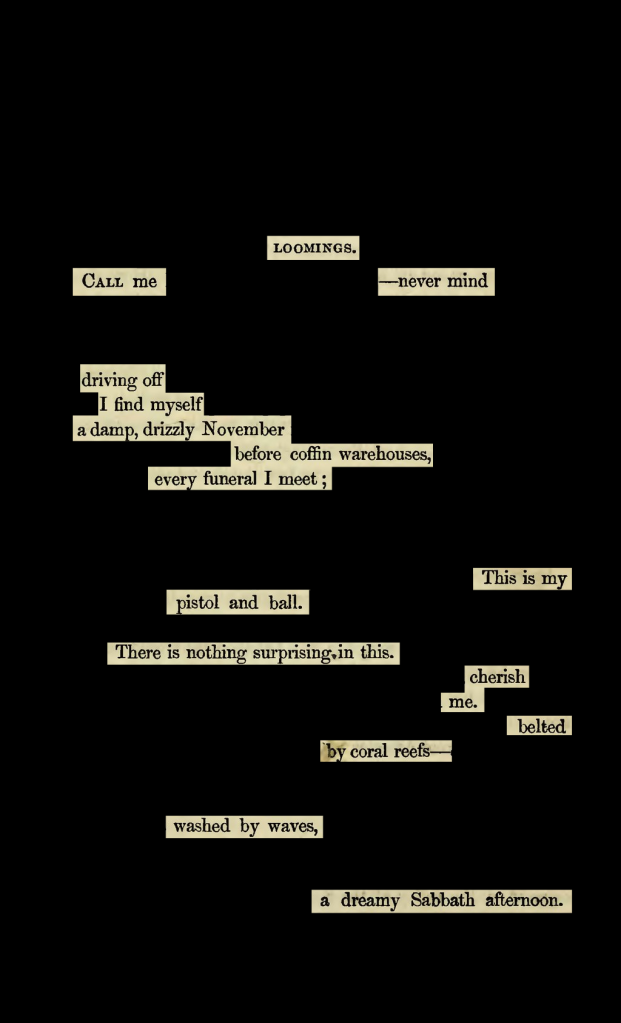

























 Katie Palmer